

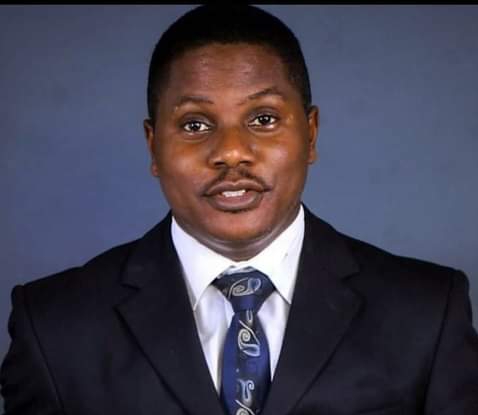
By Bayo Akinlade
The Constitution of the Federal Republic of Nigeria clearly states that the membership of the Judicial Service Commission of each State shall consist; amongst others, “two” non- lawyers (the provision of the constitution is quoted below). However, the Oyo State Judicial Service Commission is in violation of this constitutional provision and the National Judicial Council is supporting this illegality.
The Nigeria Judicial Council (NJC) is a constitutional body responsible for the administration of justice in Nigeria. The NJC was established by Section 153 of the 1999 Constitution of the Federal Republic of Nigeria, as amended.
The NJC is chaired by the Chief Justice of Nigeria and includes other senior judges, legal practitioners, and *non-legal* members.
It plays a crucial role in maintaining the integrity and independence of the judiciary in Nigeria
However, the Judiciary in Nigeria has performed below expectations; from being declared to be one of the most corrupt institutions to handing down conflicting Judgements further destroying the Legal Profession framework and undermining juriprudential reforms.
A case in question where NJC ought to show some leadership and strength of character but doesn’t is in the case instituted by me: Adebayo Akinlade Esq (former chairman of the Ikorodu Branch of the Nigerian Bar Association, the convener of Fight Against Corruption in the Judiciary (FIACIJ), former National Publicity Secretary of the Nigeria Law Society (NLS) and convener of Duty Solicitors Network), against the Oyo State Government, the Chief Judge of Oyo State and the NJC itself.
The case which was filed in November of 2023 at the Federal High Court in Abuja to seek declaratory reliefs regarding the interpretation of the constitution on the composition of the State Judicial Service Commission was met with Preliminary Objections (PO) from the State and the Chief Judge. It wasn’t until August of 2024 that the NJC came with its own PO after being served with the processes in December last year.
It took 8 months for the Almighty NJC to respond and when it did, it was to ask that the case be struck out on the grounds that I (the plaintiff) has no locus.
My contention is simply; Oyo State Judicial Service Commission (OSJSC) has four lawyers instead of two lawyers and two non-lawyers as members of the OSJSC.
At the end of October 2024, the NJC sent inspectors to Oyo State to access the infrastructure of the Oyo State Judiciary in preparation for the appointment of new Judges and is preparing to interview candidates shortlisted by this unconstitutional OSJSC knowing fully well that there is a pending case in court challenging its membership.
Despite the ongoing case, it seems that the NJC is still taking steps to appoint judges who were interviewed and vetted by an alleged unconstitutional and ill-composed OSJSC.
*Is it right for the NJC to take steps when there is a pending suit challenging the composition of a body that has shortlisted and approved applicants for the high court bench in Oyo State?*
The NJC has several key functions, including:
1. Appointment and promotion of judges: The NJC recommends the appointment and promotion of judges for the Supreme Court, Court of Appeal, Federal High Court, and other federal courts.
2. Discipline and removal of judges: The NJC investigates complaints against judges and recommends disciplinary action or removal from office if necessary.
3. Judicial appointments and transfers: The NJC approves the appointment and transfer of judges to different jurisdictions.
4. Judicial conduct and ethics: The NJC promotes and enforces ethical conduct among judges and promotes the independence and integrity of the judiciary.
5. Judicial reform and policy: The NJC develops and implements policies to improve the administration of justice and the overall efficiency of the judicial system.
6. Budgeting and funding: The NJC prepares and manages the budget for the judiciary.
We can’t all be blaming the politicians…what is the role of the Judiciary who is the custodian of justice?
If the Judiciary cannot be transparent in the vetting and appointment of judges then Nigeria is truly doomed
CAN WE STILL TRUST THE JUDICIARY?
*Third schedule part 2 c of the Constitution of the FRN*
“The State Judicial Service Commission in Nigeria is composed of the following members
– *Chairman*: the Chief Judge of the State
– *Member*: the Attorney General of the State
– *Member*: the Grand Kadi of the Sharia Court of Appeal of the State (if any)
– *Member*: the President of the Customary Court of Appeal of the State (if any)
– *Members*: *two* legal practitioners who have been qualified to practice in Nigeria for at least ten years
– *Members*: *two* persons of unquestionable integrity, who are *not* legal practitioners, as appointed by the Governor
These members are responsible for advising the National Judicial Council on suitable persons for nomination to various judicial offices, recommending the removal of judicial officers, and appointing, dismissing, and exercising disciplinary control over certain judicial staff
*If they are not properly constituted what does it say about our appointment and transparency processes*
_Can we still trust the Judiciary?_
Dear readers, we really need your support to keep on serving you with authoritative, truthful, and juicy stories everyday. For your support, please reach out to the editor @gavelinternational66@gmail.com