

By Fisayo Ogunsakin with agency reports
Chukwuemeka Ezeugo, a Nigerian Pentecostal pastor was sentenced to death in January 2007 for the murder of a member of his church, Ann Uzoh. Popularly known as Rev King, Ezeugo’s conviction was confirmed by the Supreme Court of Nigeria on February 26, 2016 sealing his faith for a reprieve. Since then, King has remained in the condemned cell waiting endlessly for a reprieve that may never come, or an end that is taking forever.
Rev King is one of several condemned criminals in various cells across the country whose fate hang precariously on a system that is mostly unpredictable.
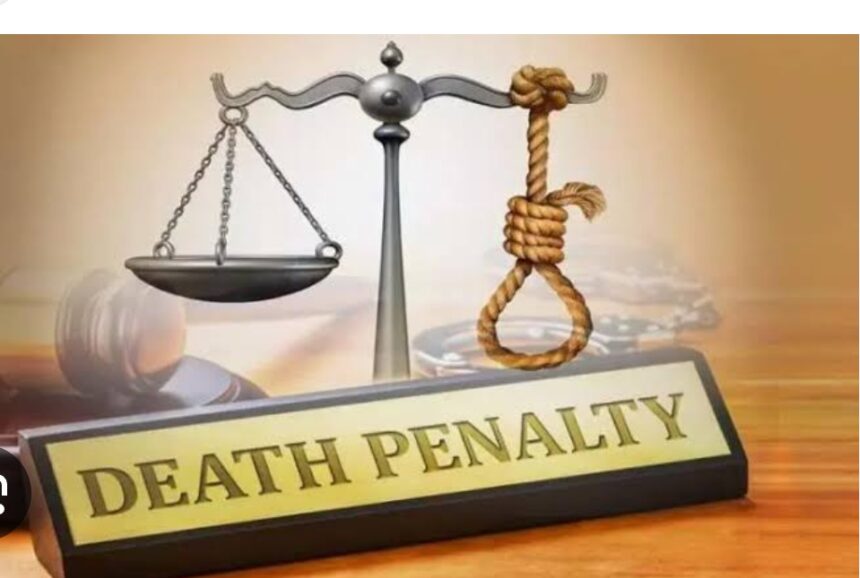
Nigeria is grappling with an enduring death penalty crisis. Though capital punishment remains legal and constitutionally supported, executions have become exceedingly rare. Governors, constitutionally mandated to sign death warrants, are increasingly reluctant to do so, leaving over 3,500 inmates languishing on death row.
The death penalty, prescribed for crimes such as murder, armed robbery, terrorism, and drug trafficking, is technically enforceable. Yet in practice, a de facto moratorium persists. This has placed Nigeria at the center of international scrutiny, especially from human rights organizations and treaty bodies urging the country to reconsider its stance.
State governors play a decisive role in the implementation of the death sentence. As heads of the executive arm of government, they are empowered not only to sign execution orders but also to grant clemency or commute sentences. However, religious beliefs, political pressures, and humanitarian considerations have discouraged most from enforcing capital punishment.
The most recent executions in Nigeria occurred during the tenures of three governors: Ibrahim Shekarau in Kano (2006), Adams Oshiomhole in Edo (2012), and Godwin Obaseki, also in Edo (2016). These isolated cases contrast with the overwhelming trend of non-enforcement.
Legal experts remain divided. Mr. Stephen Oluebube has emphasized that governors often misunderstand the distinction between their official roles and personal beliefs. He insists the act of signing a death warrant is constitutional, not moral. Still, he acknowledged that the death penalty continues to serve as a deterrent to extreme criminal behavior.
Others, like Mr. Sydney Nwachukwu, disagree. He argues that flaws in Nigeria’s judicial system—such as underfunded legal aid, flawed investigations, and judicial errors—make capital punishment too risky. “Only God should take life,” he said, expressing concerns about wrongful convictions.
Mr. Damian Nwankwo echoed these sentiments. He believes governors face enormous moral and political burdens and are pressured by civil society, religious groups, and the international community. He noted that many governors choose to commute death sentences or let them linger indefinitely rather than risk authorizing executions.
He advocates for a complete legal overhaul to remove the death penalty and instead adopt life imprisonment without parole for heinous crimes. This, he argues, would reflect Nigeria’s international human rights commitments, including those under the ICCPR and the African Charter on Human and Peoples’ Rights.
Mr. Thaddeus Mbalian highlighted another hurdle: Nigeria’s dualist legal system, which prevents international treaties from overriding domestic laws unless passed by the National Assembly. Until such legislation is enacted, conflicting obligations persist.
Mrs. Queendoline Ekong and Mr. Yakubu Dauda also support full abolition. Dauda reiterated that Section 212 of the 1999 Constitution grants governors exclusive authority over executions, beyond federal influence. He pointed to increasing political and social resistance as key reasons governors decline to act.
Despite the national deadlock, legislative efforts have emerged. In 2023, Nigeria passed the Abolition of Mandatory Death Penalty Act, allowing judges to impose fixed-term sentences instead of mandatory death or life imprisonment for certain crimes. This marked a shift toward discretion and reform.
However, in May 2024, the Senate passed a bill proposing the death penalty for drug trafficking—reviving old debates. Proponents believe it would deter crime, while critics argue it reinforces a broken system and contradicts evolving global norms.
With few executions and rising prison populations, experts now warn that maintaining death sentences without implementation creates systemic confusion and undermines justice. They urge the federal and state governments to resolve the contradiction between law and practice.
As Nigeria’s justice system stands at a crossroads, the question remains whether the country will move toward abolition or continue to uphold a law it rarely enforces.
NAN
Dear readers, we really need your support to keep on serving you with authoritative, truthful, and juicy stories everyday. For your support, please reach out to the editor @gavelinternational66@gmail.com