

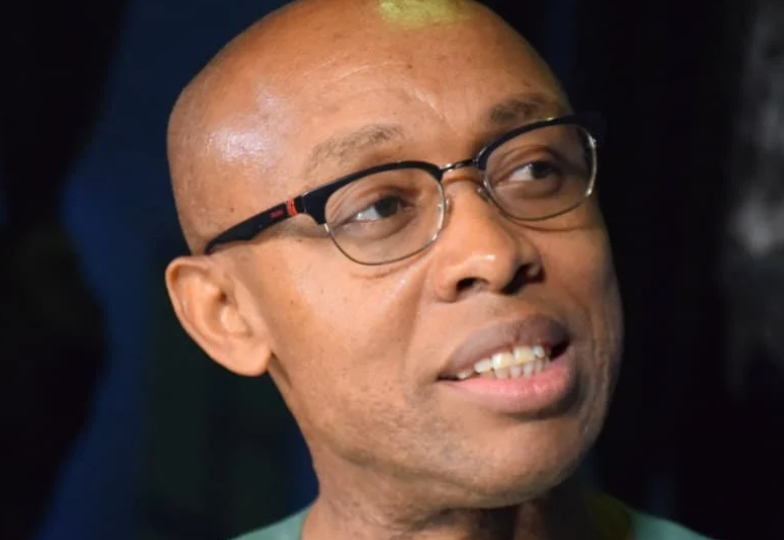

By Chidi Anselm Odinkalu
My ill-fated country, those you have affronted with them you must be equalized by sharing the same affront.
Those you have denied human rights, Allowed to stand before you but never invited in –with all of them you must be equalized by sharing the same affront–Rabindranath Tagore, Gitanjali (Song Offerings) 108 (1910)
Nigeria is a country of pious people and sacred cows. On Fridays, its mosques are filled with prayer and Tafsir. On Sundays, the churches take over with song offerings and evocative homilies. The illegitimate child of the ménage à trois between George Taubman Goldie; his employee, Frederick Lugard; and their shared mistress, Flora Shaw, it was a matter of fate that the country would live in interminably fruitless search of prayer and miracle.
Written in 1959 by Lillian Jane Williams and scored by Frances Benda, Nigeria’s first national anthem was ultimately a failed effort at inventing a civic prayer to expiate for the original sin that afflicted the country’s birth. Its third stanza ended in an invocation to the “God of all creation” to “grant this our one request” and “help us to build a nation where no man is oppressed.” It was as if this prayer forgot that the country had women too, not to mention children.
Under this prayerful invocation, Nigeria raced through a pogrom, a civil war, and four coups (including one unsuccessful one) in its first 20 years of Independence, accounting for the killing of three of its first four Heads of State and three of its first four heads of government. As a prayer, it did not seem to hold God’s attention.
Rather than investigate or address why the prayer appeared to have suffered derailment on its way upstairs, the country sought replacement therapy. In 1978, it retired that anthem in favour of another one.
Invented by committee, the fate of this second anthem was sealed at birth when it was arranged by the Police Band. Like its predecessor, it prays to the “God of creation” to help us “to build a nation where peace and justice shall reign.” Launched into a transition and bridled under austerity, this second anthem became a totem to treason; and song offering for a succession of military usurpers whose primary vocation was to sow constitutional instability and sunder the nation.
Two decades into its life, it was evident that the second anthem did not cut much ice with the Heavens either as the country’s problems seemed to multiply in direct proportion to the frequency of its rendition. The response was a multiplicity of prayer projects to save Nigeria. Indeed, Nigeria’s second military ruler and its first four-star army General, Yakubu Gowon, retired to a ministry known as “Nigeria Prays”.
It was, however, Nigeria’s largest Christian denomination, the Catholic Church, which gave full vent to the enterprise of praying for Nigeria. Five days after the military annulled the outcome of the June 12 1993 elections and as the country laboured under existential uncertainty, On 27 June 1993, the Catholic Bishops Conference of Nigeria launched the “Prayer for Nigeria in Distress” as their unique contribution to Nigeria’s search for sovereign safe harbour.
This “prayer” confesses on behalf of Nigerians that “[W]e are sorry for all the sins We have committed and for the good deeds We failed to do”, but pleads with the Almighty to “keep us safe from the punishments we deserve”, without giving any compelling reasons why He should. It admits that “we are weighed down not only by uncertainties, but also by moral, economic and political problems”, begs Him to “be merciful to us your people”, and, with shameless lack of self-awareness, asks Him to “spare this Nation Nigeria from chaos, anarchy and doom.”
This prayer is at once a summary of the Nigerian condition and a brutal piece of self-indictment. Its authors clearly understood that the natural logic of the Nigeria’s trajectory is “chaos, anarchy and doom”. What is not clear is why they believed that the way to spare the country these consequences was through a ritual of gratuitous weekly prayer incantations.
33 years of this ritual have not made much dent on the natural logic of Nigeria’s sovereign misadventure. During that period, lots of Catholic priests and bishops have – with full knowledge – blessed politicians who rigged elections and collected car gifts and cathedrals procured with stolen public funds. Nigeria’s sacred cows continue to receive their benedictions from pious men who offer prayers to save the country from the doom to which their acts logically condemn it.
As if goaded by a clan of shamans, President Bola Ahmed Tinubu disinterred the first anthem in 2024 – 45 years after it was first retired. He has since then turned the country into a gaggle of “prayer warriors”.
Most recently, Kebbi State Governor, Nasir Idris, has called for “divine intervention” to save the country from insecurity. As the last Ramadan season entered its final furlong, Borno State Governor, Babagana Zulum, “called on Muslims and Christians in the state to intensify prayers against rising insecurity issues.” Not to be outdone, Benue State Governor – a Catholic Priest – preaches “sustained prayers” as the answer to insecurity in his state.
When he was Governor of Zamfara State in 2022, Bello Matawalle funded 97 clerics to Saudi Arabia “to go and pray for a stoppage of banditry” in order to “diversify strategies to restore peace and security in the state.” Today, as Nigeria’s Minister of State for Defence, his tried and tested playbook bears remarkable fruit for a country affronted!
But the real prayer for Nigeria was arguably written four years before the Amalgamation that begat it in 1914 and over ten thousands kilometres away, in a collection of chants by Bengali mystic, Rabindranath Tagore, published under the title “Gitanjali.”
The tale of Tagore, India and Nigeria makes for a most unlikely coincidence. Tagore was born in 1861, the same year in which the British possessed Lagos. He died in 1941, just six years before the British project in India ended in that most bloody Partition, the same year in which the Nigerian Regiment helped to restore the Emperor in Ethiopia. From Tagore’s India, the British exported many things to Nigeria, including the Criminal Code, the Verandah, and Frederick Lugard.
It is, therefore, not at all un-natural that Tagore’s prayer for Nigeria was also made in India. Among his collection in Gitanjali, Tagore pens a trilogy of patriotic songs: Gitanjali 106 calls attention to the perils of social exclusion; 107 acknowledges India’s vast under-class of social exclusion in the caste system; and 108 predicts a terrible reckoning:
Day after day, you have avoided human touch
Showing your contempt for the deity that dwells in man.
One day, the Creator’s ruthless fury
will make you sit by famine’s doorway
and share with others what there is to eat and drink.
With all of them you’ll have to be equalized by sharing the same affront.
These excluded were the people whom another of India’s celebrated founders, Mohandas Gandhi, called the “Harijans” or “God’s people.” It is no accident that Nigeria’s encounter with its reckoning appears to be happening “in God’s name”.
In the north-east, a Jihadist onslaught proclaims a Caliphate in God’s name.
In the north-west, the killers of Deborah claimed they did it in God’s name.
In the south-east, adherents of the Indigenous People of Biafra, IPoB, claim to be the children of “Chukwu Okike Abiama”, which translates into “God of all Creation” in Nigeria’s relay of national anthems.
All this grasping for the Almighty reflects the reality that the Nigerian State has never cared nor existed for its underclass. It has only ever treated them as both sub-human and expendable.
As the country prepares for another milestone in its romance with sovereign organized crime in 2027, the authors of this script must pray that Nigeria’s excluded and expended do not decide to ask for what is duly theirs. For if they could, they will present the country for the first time with a proposition for which there are not enough prayers or bullets.
For Nigeria, they are Tagore’s prayer in the fourth stanza of Gitanjali 108 answered:
Whoever you fling to a lower level will bind you to that level.
Whoever you keep behind your back is only dragging you backwards.
Whoever you keep occluded,
Hidden in ignorance-darkness,
is shaping a chasm between you and your welfare.
You must be equalized with all of them by sharing the same affront.
A lawyer and a teacher, Odinkalu can be reached at chidi.odinkalu@tufts.edu
Dear readers, we really need your support to keep on serving you with authoritative, truthful, and juicy stories everyday. For your support, please reach out to the editor @gavelinternational66@gmail.com