

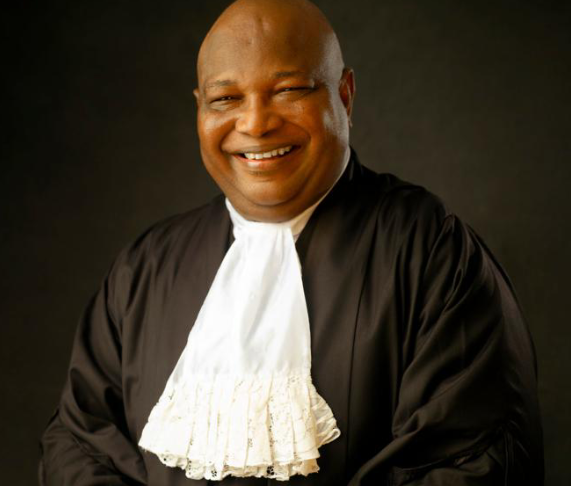

By Dr. Wahab Shittu, SAN
THE FACTS, SO FAR AS THEY ARE PUBLIC
On 5 August 2026, ten days before the Osun State governorship election scheduled for 15 August, a restriction was placed on an account of the Osun State Government domiciled with First Bank. The account is said to be the State’s statutory allocation account, used among other things for the payment of salaries.
The Economic and Financial Crimes Commission has explained its action.
Through its Head of Media and Publicity, the Commission stated that it had been investigating the finances of the State since March 2026, in relation to the alleged fraudulent handling of Ecology Funds, Intervention Funds and Federation Account allocations amounting to some ₦11 billion; that officials including the State’s Accountant-General had been interviewed; that the investigation alone would not have warranted a Post No Debit order; but that from 2 August 2026 it observed what it described as precipitate and unwarranted movements of funds from the accounts into several corporate entities it regarded as suspicious, and that it acted to halt that movement. The Commission stated that it cannot watch idly while a State’s account is pillaged.
The Osun State Government rejected the action. Governor Ademola Adeleke described it as an abuse of due process, denied that State funds were being deployed for campaign purposes, asserted that no court order had been obtained before the bank was directed, and instructed the State’s Attorney-General to challenge the restriction before the Federal High Court in Osogbo. Opposition parties characterised the step as the deployment of a federal institution against a State on the eve of a poll.
On 6 August 2026, President Bola Ahmed Tinubu intervened by a statement he personally signed. He said he was not questioning the Commission’s statutory powers, its independence or its mandate, and that since assuming office he had maintained that law enforcement agencies must discharge their responsibilities without political interference. He said he was, however, deeply embarrassed by the timing, since the State was days from a governorship election and any act of a federal institution is commonly attributed to the Presidency whether or not the President knew of it. Invoking the overriding public interest in preserving confidence in the integrity and fairness of the democratic process, he directed the Commission to return to court, vacate the order and discontinue the action against the State.
One matter of fact remains unresolved on the public record, and it is not a small one. The President’s statement refers to a court order obtained on 5 August. Contemporaneous reports, and the State’s own complaint, refer instead to a letter of the same date addressed to the bank, signed for the Director of Investigation, directing a Post No Debit restriction pending conclusion of the investigation, and citing sections 38(1) and (2) of the Economic and Financial Crimes Commission (Establishment) Act 2004 and section 24 of the Money Laundering (Prevention and Prohibition) Act 2022. Whether the restriction rested on an administrative directive to the bank, on a judicial order, or on both in sequence is the hinge on which the whole legal controversy turns. Until it is clarified, everything said about it including in this piece must be provisional.
THE LEGAL QUESTION THAT LIES UNDERNEATH
Strip away the politics and a narrow question remains: on what authority may a bank be directed to stop a State government from operating its account, and for how long? Nigerian law recognises a distinction between the immediate preventive step and the sustained restraint. The Court of Appeal has held, in litigation between the Commission and the Attorney-General of Benue State, that the Commission may place a stop order on an account suspected of connection with financial crime for a short period reported as 72 hours without a court order, but that beyond that period a court order is required if the restriction is to be maintained. Practitioners should verify the report before relying on it, but the principle it expresses is orthodox and unsurprising: an administrative freeze is a holding measure, and holding measures are not permitted to become permanent by inertia.
That distinction is the whole of the matter. A brief administrative freeze to prevent the dissipation of funds while an application is made to a judge is one thing. An open-ended restriction of a State’s principal account, imposed by letter and lifted only when the agency is satisfied, is quite another. The first is preventive. The second is adjudicative, and adjudication belongs to courts.
Three further legal considerations deserve mention.
The provisions cited. The sections relied upon in the letter are investigative and money-laundering provisions. Whether either confers an express power to impose an indefinite restriction on a State government’s statutory allocation account, as distinct from a power to demand information or to take short preventive steps, is a question the Federal High Court in Osogbo may now have to answer. It is a proper question, and the Commission should welcome its determination rather than resist it.
The available alternative. Since 2022 Nigeria has possessed a comprehensive statutory framework for the restraint, seizure and management of property suspected to be the proceeds of unlawful activity, under the Proceeds of Crime (Recovery and Management) Act. That Act supplies exactly what this situation called for: judicial authorisation, defined duration, and a management regime. Where a dedicated statutory route exists, an agency that proceeds by letter invites the question why it did not use the route the legislature built.
The constitutional dimension.
The account in question is said to be the State’s statutory allocation account, funded from the Federation Account under section 162 of the Constitution. In Attorney-General of Lagos State v Attorney-General of the Federation the Supreme Court held that the President had no power to withhold statutory allocations due to local government councils in order to compel compliance with a federal position.
The present case is not identical an agency acting on a suspicion of crime is not the same as an Executive withholding funds to exert political pressure but the constitutional anxiety is the same anxiety. Our federal structure is finely balanced, and a federal agency that can immobilise a State’s principal account holds, in practical terms, a power over that State’s capacity to govern. Such a power must be exercised, if at all, under judicial supervision and never otherwise.
To these must be added the plainest consideration of all. A statutory allocation account pays salaries. Teachers, nurses, pensioners and local government workers are not suspects in any investigation. Whatever the merits of the underlying inquiry, a restraint that catches the innocent along with the accounts under suspicion requires either a carve-out or a very short life, and preferably both.
THE CASE FOR THE COMMISSION, PUT AT ITS STRONGEST
Fairness requires that the Commission’s position be stated as its ablest advocate would state it, and it is stronger than its critics allow. An anti-corruption agency that watches public funds being moved out of reach and does nothing has failed in the only duty that matters.
The Commission says its investigation predates the electoral season by five months, that it had already interviewed the Accountant-General, and that it did not act on the strength of that investigation alone. What is said to have moved it was a fresh event: a pattern of transfers beginning on 2 August into corporate entities it regarded as suspicious. If that account is accurate, the Commission was not choosing a moment. The moment chose it. Funds in motion cannot be recovered at leisure; the first forty-eight hours of a dissipation are frequently the only hours that matter.
There is a further point which those who invoke the electoral calendar tend to overlook. If the proximity of an election were to operate as an immunity, every incumbent in Nigeria would enjoy a lawful window, several months wide, in which the public treasury could be emptied without interference. That cannot be right. An election is a reason for care in the manner of enforcement. It is not a reason for its suspension. The Commission is also entitled to observe that it acted through a documented process, gave a public account of its reasoning within hours, and has not resisted judicial scrutiny.
THE CASE FOR THE STATE, PUT AT ITS STRONGEST
The State’s answer is also stronger than its critics allow. Its central complaint is procedural rather than political, and it is the complaint of every citizen whose account has ever been frozen by letter: show me the order. A government of a federating unit is entitled to be told, before its capacity to pay its workforce is suspended, which court authorised the suspension, on what material, and for how long. If no order preceded the restriction, then the State’s objection requires no political explanation at all. It is simply the rule of law being asserted by a party that happens on this occasion to be a State government.
Second, the State is entitled to the presumption of innocence. An investigation is not a finding. The figure of ₦11 billion is an allegation under inquiry, and it has not been tested in any court.
Third, the electoral point is legitimate even if it is inconvenient. A State government that cannot pay salaries ten days before a poll is disadvantaged in ways that no subsequent vindication can repair. Where an action is capable of affecting an election, the appearance of the thing is not a trivial consideration. It is part of the substance.
THE PRESIDENTIAL DIRECTIVE: WHAT IT GOT RIGHT
The President’s intervention was, in my respectful assessment, correct in its instinct and beneficial in its effect, and it deserves to be said plainly.
It recognised a truth that our institutions habitually deny: that in the Nigerian public imagination there is no such thing as an autonomous federal agency. Whatever the statute book says, an action by a federal body ten days before a State election is read by the electorate as an act of the Federal Government. The President said as much, and he was right to say it.
It removed, at a stroke, the most damaging possible narrative about the coming poll — that it had been influenced by the immobilisation of a State’s treasury. Elections are decided partly by results and partly by whether the losing side believes it lost fairly. Anything that protects the second is worth a great deal.
It also cost the President something politically, in a direction opposite to his own party’s immediate interest, and that is worth acknowledging. A directive that damages one’s own side is more credible evidence of principle than a hundred speeches about the rule of law.
THE DIFFICULTY THE DIRECTIVE CREATES, WHICH MUST ALSO BE FACED
Candour requires the other half of the ledger, and I would be doing the President no service by suppressing it.
The statement contains a tension it does not resolve. It affirms that law enforcement agencies must operate independently and free of political interference, and then directs one of them to discontinue a specific action in a specific case.
Both halves cannot be wholly true at once. If the Commission is independent, the President’s view of the wisdom of its timing is an opinion of great weight but not an instruction. If the President may direct the Commission to discontinue a proceeding, then the Commission’s independence is a convention rather than a rule, and the country should know that.
This is not a criticism of the outcome, which I support. It is an observation about the mechanism, which was the only mechanism available because we have not built a better one. The President had no lawful instrument through which to say “this may be right in substance but it is wrong in timing” other than a direction to stop. That is precisely the gap this episode exposes.
There is a second and subtler risk. A directive to discontinue is a blunt instrument. Read narrowly, it vacates a restriction. Read broadly and the statement speaks of discontinuing whatever action has been instituted it may be taken to terminate an investigation into ₦11 billion of public money. If the underlying inquiry is meritorious, its abandonment would be a disservice to the people of Osun State, who are the owners of the funds in question and the true victims of any misapplication of them. Justice to all parties requires that the account be unfrozen and that the investigation continue to its proper conclusion, in court if the evidence warrants it and by public discontinuance if it does not.
I would therefore respectfully invite the Presidency to clarify that the directive addresses the restraint and its timing, and not the investigation itself.
ON MOTIVE, AND WHY IT IS THE WRONG BATTLEGROUND
Much of the argument this week has been conducted about motive. Was the Commission acting in good faith or at the instance of others? Was the State’s outcry principle or self-preservation?
I want to suggest, with respect to all sides, that motive is the wrong battleground, and that an institution which chooses to fight on it has already lost. Motive is unknowable from outside. It cannot be proved by press statement, and an agency that responds to allegations of political motivation by asserting its own purity has entered a contest it cannot win, because assertion answers assertion indefinitely. The Commission’s officials know, as I do, that the great majority of their work is unglamorous, technically demanding and honestly done. But that knowledge is not transferable to a sceptical public by declaration.
What is transferable is procedure. The public can see whether a court authorised a restraint. It can see whether a time limit was imposed. It can see whether salaries were carved out. It can see whether a published rule was followed or a discretion exercised. Visible regularity of procedure is the only currency in which an enforcement agency can purchase public confidence, and it is a currency that spends equally well with friends and with adversaries.
That is why the strongest defence of the Commission in this matter is not “our motives were pure.” It is “here is the order, here is the material on which it was granted, here is the date on which it expires, and here is the account we did not touch because teachers are paid from it.” Where that answer can be given, motive ceases to matter. Where it cannot, no protestation of altruism will substitute for it.
A PROTOCOL FOR THE FUTURE
The value of this episode lies in what is built from it. I offer the following for the consideration of the Commission, the Attorney-General of the Federation, the National Assembly and the Bar.
One: an electoral-period protocol. The Commission should publish a standing rule that within a defined window before an election sixty days is the norm in several comparable jurisdictions no overt investigative or restraining step will be taken against a candidate, a party, or the government of the electoral area, save with the personal written authorisation of the Chairman, on recorded reasons, and in a case of demonstrable urgency such as active dissipation. Such a rule protects the Commission far more than it constrains it, because compliance with a published rule is a complete answer to an allegation of political timing.
Two: judicial authorisation before any restraint of a State’s statutory allocation account. The immobilisation of a federating unit’s principal account should never rest on an administrative letter. It should require an order of the Federal High Court, obtained on affidavit evidence, with a return date within seven days.
Three: a salary and pension carve-out. Any restraint on a government account should, as a matter of standing policy, exempt sums required for salaries, pensions and statutory transfers to local governments, unless the court is satisfied on specific material that those very channels are the instrument of the suspected offence.
Four: strict time limits. Every administrative restraint should carry an automatic expiry, and every judicial restraint a defined term renewable only on fresh material. Nothing should be capable of becoming permanent through the passage of time and the silence of the parties.
Five: use the Proceeds of Crime Act. Where property is suspected to be the proceeds of unlawful activity, the 2022 Act supplies the route. It should be the default, and departure from it should be explained.
Six: publish prosecutorial and restraint guidelines. The decision to charge, the decision to seek interim forfeiture, and the decision to communicate publicly about a suspect should each be governed by a written, published policy. Discretion exercised under a published rule is authority. The same discretion exercised without one is, to the public eye, indistinguishable from caprice.
Seven: a protocol between the Federal Government and the States. Investigations touching State finances raise federalism questions that neither party can resolve alone. A standing consultative mechanism involving the Attorney-General of the Federation and the Attorneys-General of the States would allow such matters to be handled without each becoming a constitutional crisis.
Eight: a statutory basis for what the President did. Rather than leaving the President with only the blunt instrument of a direction to discontinue, the law might provide for a formal, published, reasoned request for deferral in defined circumstances, with the agency obliged to consider it and to record its response. That converts an act of personal intervention into an institutional process capable of being scrutinised.
Nine: continue the investigation. The Commission should state publicly that the inquiry into the alleged mishandling of ₦11 billion continues, that it will be concluded on the evidence, and that it will report the outcome either way. The people of Osun State are entitled to know what became of their money, whoever wins on 15 August.
Ten: let the court decide the law. The State has approached the Federal High Court. That is exactly the right forum. Whatever the outcome, a reasoned judgment on the limits of administrative restraint over State accounts would be worth more to this country than any number of press statements, and I would urge both sides to seek it rather than to settle the point by attrition.
CONCLUSION:
JUSTICE TO ALL PARTIES
What does justice require here? It requires four things at once, and there is no contradiction between them. It requires that the people of Osun State vote on 15 August in conditions that neither side can afterwards call rigged. The President’s directive advances that, and to that extent it was timely and right.
It requires that the Commission be permitted, and expected, to complete a legitimate investigation into the handling of ₦11 billion of public money, without fear, without favour, and without abandonment for anyone’s electoral convenience.
It requires that the State Government be treated as every citizen should be treated: informed of the order against it, permitted to test it in court, and presumed innocent until the contrary is proved.
And it requires that we build, out of this week, the procedural architecture whose absence made the week possible. Every actor in this drama behaved, on the most charitable reading, according to their institutional instinct. The Commission moved to stop money leaving. The State moved to protect its treasury and its mandate. The President moved to protect the credibility of an election. None of those instincts was disreputable. What was missing was a rule that would have told each of them, in advance, what to do and the absence of that rule is the only real scandal in this affair.
Anti-corruption enforcement in Nigeria is indispensable. It is precisely because it is indispensable that its procedure must be impeccable. An agency’s strongest asset is not its power but its reputation for regularity, and reputations of that kind are built in the unremarkable cases and spent in the remarkable ones. Let this remarkable case be the occasion for building rather than for spending.
Dr. Wahab Shittu, SAN teaches Law at the Faculty of Law, University of Lagos, Akoka, Lagos.
Dear readers, we really need your support to keep on serving you with authoritative, truthful, and juicy stories everyday. For your support, please reach out to the editor @gavelinternational66@gmail.com