


By Femi Falana SAN
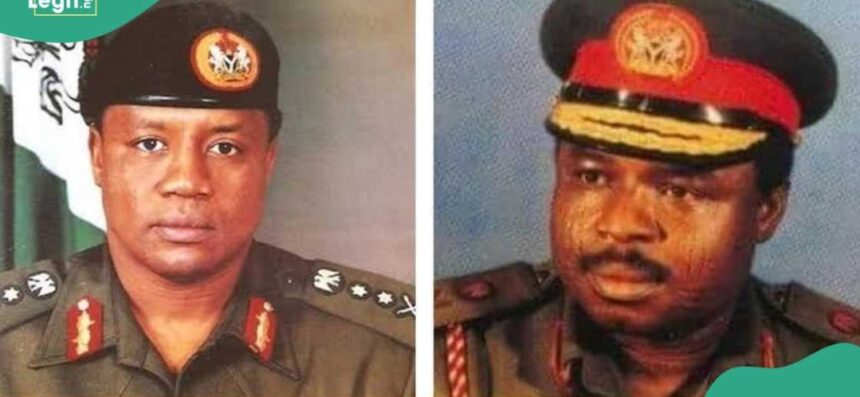
Following the palace coup d’état that sacked the Mohammadu Buhari military junta in August 1985, his successor, General Ibrahim Babangida (a.k.a. IBB) moved speedily to consolidate his hold on power. Barely a month after the coup, 42 military officers were forcefully retired from service. In December 1985, the new military regime announced that it had discovered a plot to overthrow it. IBB’s childhood friend, classmate, and close associate, General Mamman Jiya Vatsa and 9 other officers were arrested and detained for allegedly planning the coup.
It was announced by the defence headquarters that the detained coup plotters had planned the bombing the Eko Bridge in Lagos, sabotaging vital military airbases, and shooting down or hijacking the presidential aircraft. However, no iota of evidence was adduced to justify the grave allegations levelled against the detained coup suspects. Furthermore, at the material time, the suspects could only have been tried for treasonable felony in the Lagos High Court. The offence of planning a coup was triable under section 41 of the Criminal Code Act which provides that any person who forms an intention to remove during his term of office otherwise than by constitutional means, the President as Head of State of the Federation and Commander‐in‐Chief of the Armed Forces, is guilty of a felony and is liable to imprisonment for life.
But as Babangida wanted Vatsa killed, he rejected the recommendation that the coup suspects be tried under the Criminal Code Act. To achieve his objective, he hurriedly promulgated
the Treason and Treasonable Offences Decree No 1 of 1986 which prescribed the death penalty for treason and treasonable offences. Thus, the decree was promulgated after the alleged offence had been committed. Indeed, the Decree came into force on the 6th day of January 1986, a month after the arrest and detention of of the coup suspects.
Unlike other defendants who were defended by military lawyers imposed on them by the military authorities, Vatsa requested Colonel Yohanna Madaki, an army officer and qualified lawyer to defend him.The authorities rejected the request and thereby violated his constitutionally guaranteed right to a lawyer of his choice. Thus, Vatsa was compelled to defend himself before the tribunal. During the trial, he was accused of funding the coup with N10,000 given to Lt. Col. Musa Bitiyong, one of the suspects. While dismissing the allegation of his involvement in the plot to sack the IBB military junta, Vatsa said that the said N10,000 was not provided for coup funding but a farming loan to a colleague.
Vatsa was also accused of using his position as Minister of the Federal Capital Territory to give a certificate of occupancy to another defendant. He rebutted the allegation by producing evidence of the certificates of occupancy given to several other military officers who were not accused of plotting a coup. Apart from the fact that neither Vatsa nor any of the alleged coupists commanded troops, experts in coup making have said that it is ridiculous to suggest that the meager sum of N10,000 was earmarked to fund a coup in 1985. Hence, in the absence of any compelling evidence with which to nail Vatsa, the tribunal said that he “had long nursed grievances against the President and that the evidence showed the scorn and grudge Major-General Vatsa had harboured against the President since he was Chief of Army Staff.”
Consequently, in its judgment delivered on February 25, 1986, Vatsa and 12 other defendants were convicted and sentenced to death by the Charles Ndiomu-led Special Military Tribunal that tried them. The tribunal however informed the convicts that they had 7 days within which to appeal against their death sentences which were subject to confirmation by the governing Armed Forces Ruling Council (AFRC). But as the judgment was not made available to the convicts within the 7 days, they were enable to appeal to the AFRC. Furthermore, section 5(1) of the decree required the transmission of the record of the proceedings of the tribunal to the confirming authority for confirmation of the sentence of the tribunal for that offence was violated as the proceedings were not transmitted to the AFRC before the purported confirmation of the death sentences passed on the defendants.
Based on the disputed narrative about the coup plot, the media accused the regime of resorting to a phantom coup to eliminate its political opponents. Many prominent citizens pleaded with IBB to spare the lives of the convicts. On March 4, 1976, the three leading writers in the country, Professors Wole Soyinka, Chinua Achebe, and Pepper Clerk met with IBB and pleaded for reprieve for the convicts. IBB promised to consider the representation made by the respected literary figures. Contrary to such assurance, the nation was rudely informed on March 5, 1986 by the Chairman of the Joint Service Chiefs, General Domkat Bali that the convicts had been executed.
Since then, the Vatsa family has has insisted that the allegation levelled against him was a fabrication to justify the cowardly elimination of a political rival. The claim of the Vatsa family has since been corroborated by some of the dramatis personae. In a detailed interview published by the The News Magazine in June 2004, General Domkat Bali turned round to discredit the coup story when he said that: “My regret is that up till now, I am not sure whether Vatsa ought to have been killed because whatever evidence they amassed against him was weak. My only regret is that I cannot say, don’t do it. I am not so sure whether we were right to have killed him.”
While confirming that there was no love lost between
IBB and Vatsa, General Bali stated that: “I think there must be something between the two of them. I think they went to the same secondary school or something like that. There was something between them since secondary school days. I think that they didn’t seem to trust each other much. It may have been something that started when they were in secondary school that created that long-term hatred.”
In 2006, President Olusegun Obasanjo received Vatsa’s widow, Mrs Safiya Vatsa at the Presidential Villa after she had petitioned the government to review her husband’s brutal execution by the IBB military junta. On that occasion, Obasanjo praised Vatsa’s past service, and assured the widow that the petition would receive due administrative consideration. But Obasanjo did not order a review of the case as he did not want to betray IBB, his close ally. However, IBB has been constantly pressured by history to justify the execution of General Vatsa on the basis of the phantom coup.
While speaking in an interview with Badeggi 90.1 FM in Minna, Niger State, as part of activities marking his 85th birthday, General Babangida claimed, for the umpteenth time, why he could not have prevented the execution of his close friend and colleague. He stated that the finding of the Special Military Tribunal concerning the involvement of General Vatsa in the coup plot left him “shocked, devastated and deeply disappointed”. He claimed that, in the circumstances, there was nothing he could do to exonerate him from the consequences prescribed by military law. “My hands were tied. That was how I lost my brother, General Mamman Vatsa”, said IBB.
But contrary to IBB’s claim that he could not have intervened in favour of Vatsa because of the military law governing the case, the law did not tie his hands. It was a case of premeditated murder. In other words, IBB tied his own hands in order to eliminate Vatsa as the law did not prescribe the death penalty for the offence of plotting a coup at the material time. Vatsa and others were charged with treason whereas the offence alleged to have been committed by them was treasonable felony.
To that extent, the trial, conviction and death sentence passed on the defendants were illegal as they contravened section 36(8) of the unsuspended part of the 1979 Constitution which provided that “no person shall be held to be guilty of a criminal offence on account of any act or omission that did not, at the time it took place, constitute such an offence, and no penalty shall be imposed for any criminal offence heavier than the penalty in force at the time the offence was committed.”
In the same vein, the confirmation of the conviction and the death sentence by the members of Armed Forces Ruling Council via a retrospective decree was illegal in every material particular. It ought to be pointed out that the hands of IBB were not tied as the confirming authority was empowered by section 5(4)(a) of the decree to commute a death sentence to imprisonment. Having regard to the weak evidence adduced by the prosecution in the case, the Armed Forces Ruling Council headed by IBB ought to have commuted the death sentence passed on the coup convicts to a term of imprisonment. In his book titled: “A Journey in Service”, IBB admitted that some of the convicts had their sentences commuted to life or other jail terms but that there was no room “to commute the sentences for Vatsa and the other core planners.”
Finally, by promulgating the Treason and Treasonable Offences Decree No 1 of 1986 when the alleged offence had been committed, and the suspects were awaiting trial, IBB set out, ab initio, to kill Vatsa and other coup convicts. Hence, they were not tried under section 41 of the Criminal Code Act which was the applicable law when the alleged offence was committed. Although Vatsa was granted a posthumous pardon by President Bola Tinubu in October 2025, the Federal Government should proceed to open an investigation into the matter since IBB has continued to justify his role in the tragic incident. Whoever is indicted in the investigation should be prosecuted for murder in the interest of justice.
Dear readers, we really need your support to keep on serving you with authoritative, truthful, and juicy stories everyday. For your support, please reach out to the editor @gavelinternational66@gmail.com