

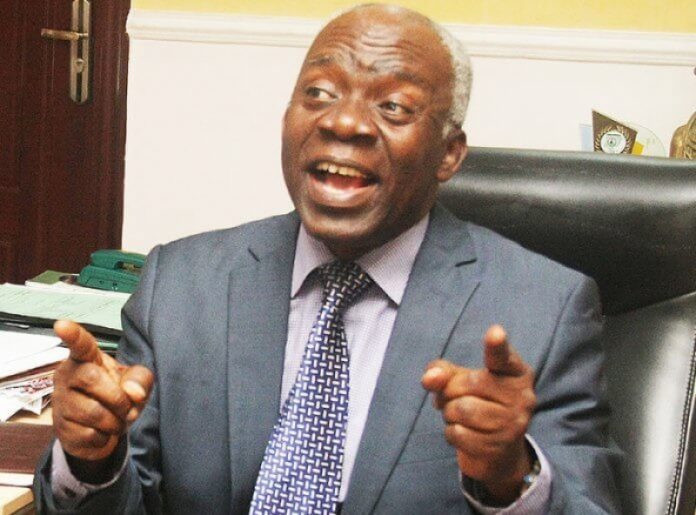

By Femi Falana, SAN
On 4 September 2026, a Nigerian cleric, Bishop Michael Taiwo Fakunle, was brutally assassinated by unknown gunmen in Johannesburg. After reportedly issuing threats against him, his killers went to his home and shot him dead. Barely 24 hours later, another Nigerian, Mr James Uchechukwu Nwankwo, reportedly died after being subjected to what has been described in the press as “gruesome interrogation techniques” by officers of the South African Police Service (SAPS) in Johannesburg.
According to the Nigerian High Commissioner to South Africa, Chief Femi Fani-Kayode, Bishop Fakunle and Mr Nwankwo were the seventh and eighth Nigerians killed in South Africa in 2026, with four of the eight allegedly killed by South African police officers. He further stated that more than 100 Nigerians had been killed in South Africa between 2022 and 2026, including more than 30 allegedly killed by officers of SAPS and the South African Defence Force.
Chief Fani-Kayode stated that, despite repeated expressions of concern, “not one person has been arrested, detained, prosecuted or brought to justice” for these crimes. He called on the South African Government to do more to protect Nigerians and ensure that those responsible for the killings are brought to justice.
The response from Abuja has so far been limited to condemnation of the latest killings. Yet the Federal Government has a constitutional and international human rights obligation to protect Nigerians and to take effective measures to secure justice when their rights are violated abroad. It is particularly disturbing that this continuing crisis is taking place against the background of a fresh deadline reportedly issued to African nationals, including Nigerians, to leave South Africa by 30 September 2026.
The Federal Government cannot continue to issue statements of condemnation after every killing while taking no effective legal steps to secure accountability and justice.
The African Charter on Human and Peoples’ Rights and the International Covenant on Civil and Political Rights to which Nigeria is a state party guarantee the right to life and protect the dignity and security of every person. The obligations to investigate unlawful killings and torture, prosecute those responsible where there is relevant admissible evidence and provide effective remedies to victims and their families, including adequate compensation and guarantees of non-repetition is well established under international human rights law.
In Beneficiaries of Late Norbert Zongo and Others v Burkina Faso (Application No. 013/2011), the African Court on Human and Peoples’ Rights found Burkina Faso responsible for failing to properly investigate the assassination of investigative journalist Norbert Zongo and his companions and ordered reparations to their families and beneficiaries.
Similarly, in the Apo Six case, The Incorporated Trustees of Fiscal and Civic Rights Enlightenment Foundation v Federal Republic of Nigeria(ECW/CCJ/APP/02/14), the ECOWAS Community Court of Justice found Nigeria responsible for serious human-rights violations arising from the killing and ill-treatment of Nigerian citizens during a security operation in Abuja and awarded compensation to the victims and their families.
Having established that the South Africa Police Service and South Africa Defence Force killed 30 Nigerians from 2022 to 2026 without any investigation and prosecution of the murderers, the Federal Government ought to drag South Africa before the African Court on Human and Peoples Rights. After all, the South Africa Government recently sued Israel at the International Court of Justice over the genocidal attacks unleashed on unarmed Palestinians in Gaza by the Israeli Armed Forces.
These cases demonstrate that failure to investigate serious violations of the right to life and other fundamental rights can engage state responsibility.
In view of the continuing killings and alleged abuses of Nigerians in South Africa, I urge the Federal Government to urgently consider instituting proceedings against South Africa before the African Court on Human and Peoples’ Rights. Nigeria and South Africa are parties to the African Charter and have ratified the Protocol establishing the African Court. Nigeria can therefore explore the possibility of bringing an interstate case concerning the failure to protect Nigerian nationals from serious human-rights violations and to ensure effective investigation, prosecution and remedies.
This is not a new proposal. In July 2026, I called on Nigeria, Ghana and other African countries affected by xenophobic attacks to institute proceedings against South Africa before the African Court and seek appropriate remedies, including provisional measures and compensation. In May 2026, I also petitioned the African Commission on Human and Peoples’ Rights over the continuing xenophobic attacks and other violations in South Africa and requested that the matter be referred to the African Court.
The Federal Government should now move beyond diplomatic protests and pursue these available regional mechanisms. Nigeria ratified the Protocol establishing the African Court in 2004 but has not made the declaration under Article 34(6) accepting direct applications to the Court from individuals and non-governmental organisations.
The absence of the declaration denies Nigerians and eligible civil society organisations an important avenue of regional judicial redress. The Federal Government should therefore make the Article 34(6) declaration as a matter of urgency. It is difficult for Nigeria to demand effective regional justice for its citizens abroad while refusing to provide its own citizens with direct access to the African Court where the legal requirements for such access are otherwise satisfied.
The Federal Government should also establish a mechanism, involving the Ministry of Foreign Affairs, the Nigerian mission in South Africa and the Federal Ministry of Justice, to document all cases involving the killing, torture and other serious abuses of Nigerians’ rights in South Africa and monitor the progress of investigations and prosecutions.
The South African Government has a duty to protect Nigerians and other African nationals within its jurisdiction and to uphold their human rights.
Unless the South Africa Government is called to order by the African Court on Human and Peoples Rights, the brutal killings of Nigerians and other African migrants will continue unabated and with almost total impunity. But the Nigerian Government must also do its part to stop the violence and travesty. The Federal Government must protect Nigerians, demand accountability from South Africa and use every available regional legal mechanism to secure justice and effective remedies for the victims and their families.
Dear readers, we really need your support to keep on serving you with authoritative, truthful, and juicy stories everyday. For your support, please reach out to the editor @gavelinternational66@gmail.com