

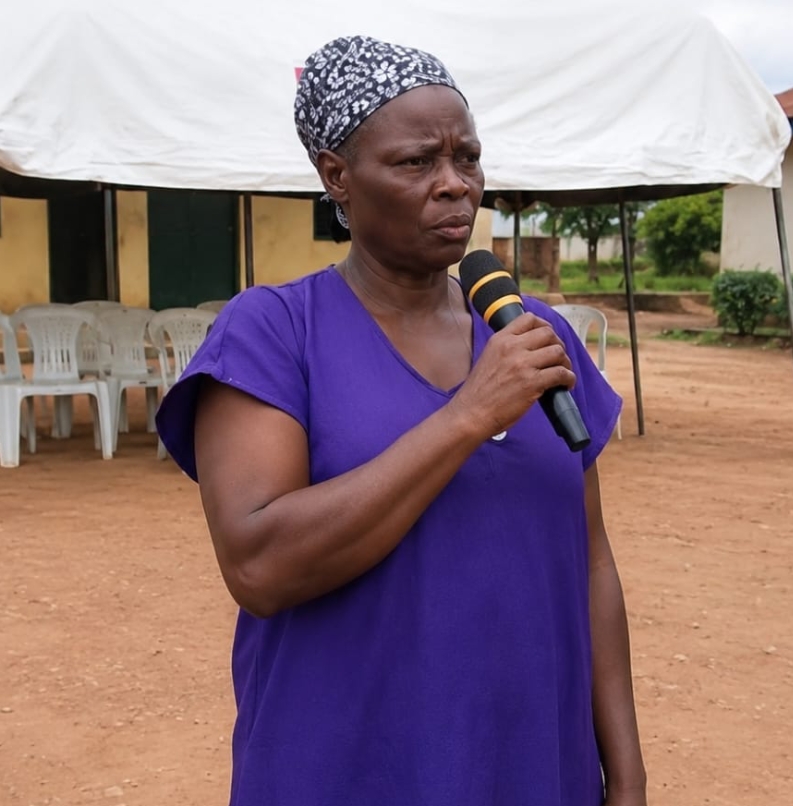

For some inmates in Nigeria’s correctional facilities, the greatest punishment is not the sentence pronounced by a court but the years spent waiting for justice. Some enter prison as young men and women and emerge old, broken or, tragically, never leave alive.
For Mrs Onome Enaya, the walls of the Benin Correctional Centre, popularly known as White House, along Sapele Road, Benin City, became the boundaries of an existence that lasted approximately three decades.
She reportedly entered prison in connection with an allegation of ritual killing involving a baby. She was subsequently sentenced to death alongside her younger brother.
But beyond the gravity of the allegation was a troubling story of prolonged incarceration, unanswered questions and a desperate search for mercy.
According to information received by the Centre for Justice, Mercy and Reconciliation (CJMR), Enaya spent more than 19 years awaiting judgment before her case was finally concluded. By the time death came in early 2026, she had reportedly spent approximately 30 years behind bars.
She died in custody, leaving behind questions about the circumstances of her conviction, the length of her incarceration and the fate of petitions reportedly submitted on her behalf.
Her younger brother was said to be among the more than 500 inmates who escaped during the October 2020 jailbreak in Benin City. His reported escape, however, does not settle the questions surrounding their conviction.
For Enaya, the opportunity to have her case reconsidered or to benefit from an intervention by the authorities reportedly never came before her death.
Her story raises a disturbing question about Nigeria’s criminal justice system: what happens when the process of seeking justice becomes a punishment in itself?
YEARS OF WAITING, LIVES PUT ON HOLD
Behind the walls of Nigeria’s correctional facilities are thousands of people whose lives have been suspended by the criminal justice process.
Some are awaiting trial. Others have been convicted but are still pursuing appeals. There are also prisoners serving sentences who continue to seek executive intervention through petitions for mercy.
Although their legal circumstances differ, many share a common experience: prolonged separation from their families, uncertainty about their future and the psychological burden of incarceration.
For an awaiting-trial inmate, every court adjournment can mean another month behind bars. A case that should ordinarily proceed within a reasonable period can become an extended ordeal because of missing witnesses, inadequate investigations, congested court dockets, unavailable legal representation or repeated applications for adjournment.
The consequences are devastating.
A young man arrested in his twenties may spend the most productive years of his life in detention. A woman separated from her children may watch them grow up without her. A breadwinner may lose his livelihood, property and family relationships.
Some prisoners become ill. Others grow old. Some die before their cases are finally resolved.
Even when an accused person is eventually discharged and acquitted, no judgment can return the years spent behind bars.
The presumption of innocence, a fundamental principle of criminal justice, becomes painfully abstract when an accused person spends years in custody before the court determines whether the allegation against him or her has been established.
RASHIDAT ABDUL: A MOTHER WHO DIED WAITING
The experience of Enaya is not an isolated case.
Another woman whose story illustrates the human cost of prolonged incarceration was Rashidat Abdul, who was sentenced to death alongside her son, Abdulrasheed Mutairu, reportedly aged 17 at the time of his arrest.
They were charged with the murder of their landlord, Samuel Oloyede, in Ekiti State, alongside two other defendants.
On April 7, 2020, the Ekiti State High Court convicted all four defendants and sentenced them to death. Their appeals to the Court of Appeal were unsuccessful.
However, the Centre for Justice, Mercy and Reconciliation, after examining the case, raised concerns about the circumstantial evidence relied upon by the prosecution and whether it sufficiently established the individual responsibility of each defendant.
The organisation subsequently appealed to the Ekiti State Government to consider the exercise of its constitutional prerogative of mercy. The appeal was publicly reported on January 29, 2025.
Tragically, according to information received by CJMR, Rashidat died in prison on November 25, 2025, while awaiting the final determination of her appeal before the Supreme Court.
She reportedly died approximately ten months after the organisation’s public appeal for mercy.
Her death left another painful question: what happens to a family when a mother and her son are both caught in the machinery of criminal justice, with one dying before the final legal process is exhausted?
What is the present situation of her son and the other surviving defendants? Was the petition for mercy considered before her death?
For Rashidat, the answers came too late, if they came at all.
WHEN AN ADJOURNMENT BECOMES A LIFE SENTENCE
The stories of Enaya and Rashidat bring into focus the plight of inmates whose cases remain unresolved for years.
For those awaiting trial, the uncertainty can be worse than the prison sentence itself.
They do not know when they will return home, whether the next court date will produce meaningful progress or whether another adjournment will prolong their ordeal.
Their families also bear the burden. Some sell property or exhaust their savings to pay lawyers. Others travel long distances to attend court proceedings, only to discover that the case has been adjourned.
Children grow up without their parents. Marriages collapse. Businesses disappear. The social stigma attached to criminal allegations often remains even when an accused person is eventually discharged.
The situation becomes particularly troubling where an inmate is unable to meet bail conditions or secure adequate legal representation.
Bail is supposed to safeguard liberty while ensuring that an accused person attends trial. Yet, in practice, some defendants remain in custody because they cannot satisfy the financial or other conditions imposed by the court.
For poor defendants, the inability to meet bail conditions can translate into months or years behind bars before guilt has been established.
The tragedy is that prolonged detention can destroy a person’s life even where the prosecution eventually fails to prove its case.
WHEN THE EVIDENCE RAISES QUESTIONS
Founder and Executive Director of CJMR, Pastor Hezekiah Deboboye Olujobi, says the organisation’s experience in examining criminal cases has exposed disturbing questions about the quality of investigations and the reliability of evidence in some convictions.
He insists that the seriousness of an allegation must never substitute for proof.
According to him, murder, rape and ritual killings are grave crimes that deserve thorough investigation and prosecution. But the gravity of an allegation should make investigators and prosecutors more meticulous, not less concerned about the quality of evidence.
One of the cases that influenced the organisation’s work involved a man accused of killing his wife for ritual purposes in Ibadan in 1993.
The man was sentenced to death, and his appeals, including an appeal before the Supreme Court, were unsuccessful.
However, when CJMR obtained and examined the case file in 2007, Olujobi said he noticed inconsistencies between the allegation and aspects of the medical evidence.
He also discovered a dissenting judgment at the Supreme Court in which a justice favoured the man’s discharge and acquittal.
Although the dissent did not overturn the conviction, it raised questions about the evidence upon which the decision was based.
Following further advocacy, the man regained his freedom after approximately 26 years in incarceration.
But his freedom could not restore the years he had lost.
Another case in Ogun State involved two individuals convicted alongside the actual perpetrators of a crime. According to Olujobi, the perpetrators reportedly admitted their involvement and maintained that the other defendants were innocent.
CJMR subsequently examined the circumstances of the arrests and the evidence presented during the prosecution. The organisation brought its findings before the Ogun State Board of Mercy and advised the Attorney-General to visit the affected prisoners.
The Attorney-General reportedly complied.
Olujobi said the intervention eventually resulted in the release of the two individuals after approximately 24 years in prison.
These cases, he argues, demonstrate why credible claims of wrongful conviction must receive independent examination.
THE COST OF A FAILED INVESTIGATION
Another disturbing case involved a couple, Korede Odubela and his wife, accused alongside several others of killing their daughter for ritual purposes in Ogun State.
According to CJMR, the defendants were arrested from different locations, including Odogbolu, Ijebu-Igbo, Ago-Iwoye and Ijebu-Ode.
The organisation’s investigation reportedly indicated that some of the accused persons did not know one another before their arrests.
After obtaining Certified True Copies of the relevant court records, CJMR forwarded its findings to the Ministry of Justice.
However, the case had already proceeded to prosecution.
After approximately nine years of trial, the wife and several other defendants were discharged, while her husband and another defendant were sentenced to death.
The outcome illustrates the importance of establishing the individual responsibility of each defendant rather than assuming that everyone arrested in connection with a crime shares the same culpability.
Another case involved Tobiloba Ipense, who was sentenced to death over allegations of ritual killing in Ogun State.
CJMR questioned aspects of the evidence, particularly the testimony of two witnesses, including a policewoman and another witness whose evidence reportedly raised concerns about hearsay.
Although the Court of Appeal dismissed his appeal, the organisation maintains that the case deserves further scrutiny.
Olujobi’s position is that suspicion, however strong, cannot replace credible and admissible evidence establishing guilt beyond reasonable doubt.
THE BOARD OF MERCY: A LAST HOPE?
For prisoners who have exhausted their ordinary appeals, the constitutional prerogative of mercy offers another avenue for relief.
The power of mercy allows the appropriate authorities to consider pardon, commutation of sentence, remission or other forms of lawful intervention.
It does not necessarily mean that a conviction is wrongful. Rather, it provides an opportunity to consider circumstances that may justify a humanitarian or exceptional intervention.
But the experiences of Enaya and Rashidat have raised questions about how effectively this mechanism operates.
How long does it take for petitions to be considered? Are prisoners informed of the outcome? What happens when an inmate dies while a petition is still pending?
Olujobi believes that mercy should not become another bureaucratic process in which prisoners spend years waiting for an answer that may never come.
He has called on the Edo and Ekiti State Governments to clarify the circumstances surrounding the cases of the two women and the handling of petitions submitted on their behalf.
He has also appealed for information on the present legal status of Abdulrasheed Mutairu and the other surviving defendants in the Ekiti murder case.
JUSTICE MUST NOT BECOME ANOTHER FORM OF PUNISHMENT
The Nigerian Correctional Service, the judiciary, prosecutors, investigators and the various state governments all have important responsibilities in ensuring that the criminal justice system works efficiently.
The courts must be adequately equipped to reduce delays. Investigations must be thorough. Prosecutors must evaluate the strength of evidence before charging suspects. Legal representation must be accessible, while bail conditions should not unnecessarily punish poverty.
Above all, awaiting-trial inmates must not be forgotten.
Their cases deserve regular monitoring, timely hearings and periodic reviews of continued detention, particularly where proceedings have been unduly prolonged.
There must also be effective mechanisms for identifying inmates who have spent excessive periods in custody without trial and ensuring that their cases receive urgent judicial attention.
This is not an argument for allowing criminals to escape justice. Victims of crime and their families deserve justice, and those found guilty through credible evidence must face the consequences prescribed by law.
But justice for victims cannot be built on the punishment of innocent people.
The criminal justice system must protect society from crime without sacrificing the fundamental rights of those accused of committing it.
WHEN THE PRISONER NEVER RETURNS HOME
Perhaps the most disturbing aspect of the stories of Enaya and Rashidat is that both women died before their pleas for intervention could produce the desired result.
Their deaths raise a fundamental question about the meaning of justice in a society governed by law.
What is the value of a legal system that cannot guarantee an accused person a timely trial? What is the purpose of a petition for mercy if its consideration comes after the prisoner has died?
For the thousands of inmates awaiting trial or the conclusion of appeals, time is not an abstract legal concept. It is life itself.
Every unnecessary adjournment consumes another day. Every prolonged detention takes another piece of a person’s existence. Every unanswered petition deepens the uncertainty of those whose freedom depends on an official decision.
Mrs Enaya reportedly spent approximately 30 years behind bars. Rashidat Abdul died while awaiting the final determination of her appeal.
Their stories are a reminder that justice delayed is not merely justice denied. In some cases, it is a life sentence without a final judgment.
And when death arrives before justice, there is no appeal capable of restoring the years that have been lost.
By Pastor Hezekiah Deboboye Olujobi (CRJ)
Founder/Executive Director, Centre for Justice, Mercy and Reconciliation (CJMR)
Ibadan, Oyo State, Nigeria
www.cjmr.com.ng
Dear readers, we really need your support to keep on serving you with authoritative, truthful, and juicy stories everyday. For your support, please reach out to the editor @gavelinternational66@gmail.com