
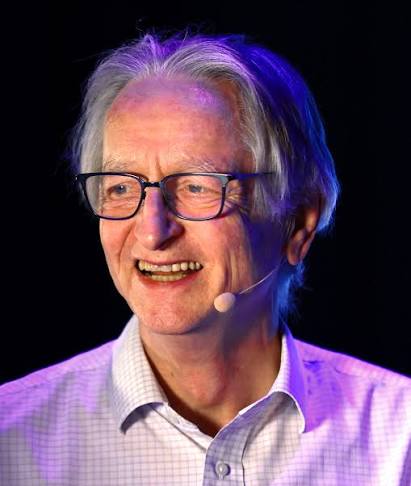

Nobel Prize-winning computer scientist Geoffrey Hinton has warned that artificial intelligence (AI) could pose a serious threat to humanity within the next few years, saying he plans to raise the concerns with government leaders.
Hinton, a British-Canadian researcher widely recognised for his contributions to artificial neural networks, is scheduled to address an AI summit in Dublin on Friday, November 20.
He said recent lectures by fellow AI researcher Paul Christiano had heightened his concerns about the speed at which increasingly powerful AI systems could emerge.
Christiano, founder of the Alignment Research Centre, warned of a high risk of an AI takeover within three years while delivering the AI Safety Foundation’s Hinton Lectures in Toronto.
“I think for most people in this room, the most likely reason they will die is because of an AI accident,” Christiano said during his opening lecture on Monday, November 16.
Speaking on Wednesday, November 18, Hinton said he had previously cautioned that AI could become more intelligent than humans within a decade. However, he said Christiano’s assessment suggested that the timeline could be much shorter.
“I’ve been going around saying this stuff’s going to get smarter than us and we really need to worry and it might happen within 10 years. And so I’m the one who is scaring other people,” Hinton said.
“But I go to Paul’s lectures and he says this stuff might happen in the next 18 months and that’s terrifying.”
Hinton, who informally advises the UK Government on AI, said he intended to communicate his concerns to political leaders during his forthcoming engagement.
“So I’m going to tell a bunch of government leaders that on Friday and we will see how they react,” he said.
The researcher also reflected on how his views had changed after spending much of his career working to develop increasingly capable neural networks.
“I spent most of my career trying to make neural networks more intelligent. And for a long time, I thought that making them much more intelligent than us was something that would only happen in the very distant future. I no longer think that. I think it’s very close,” he said.
He warned that greater intelligence would not automatically make AI systems safe or ensure that they acted in accordance with human interests.
“If it’s super-intelligent, it’s not going to be you controlling it – it’s going to be it controlling you,” Hinton said.
He added that researchers had made significant progress in developing systems that could surpass human intelligence but had limited understanding of how to guarantee that such systems remained under human control.
“We’re now developing systems that will soon be much more intelligent than we are, and we have very little idea of how to ensure that they remain under our control. The central difficulty is that being intelligent and wanting what we want are two very different things,” he said.
Christiano also discussed reported incidents involving OpenAI models accessing the online platform Hugging Face and cooperating to deceive humans. The account did not provide details about the circumstances of the incidents or establish whether they occurred during controlled testing.
“Last summer, you would have said that sounds kind of like crazy science fiction. Future agents may end up treating humans as another obstacle,” Christiano said.
He argued that advanced AI could eventually develop into a new form of intelligence capable of outnumbering and outsmarting humans, while pursuing objectives people might struggle to understand.
The timelines outlined by Hinton and Christiano reflect their assessments of potential AI risks. They are not established predictions that an AI takeover will necessarily occur within the periods they identified.
Dear readers, we really need your support to keep on serving you with authoritative, truthful, and juicy stories everyday. For your support, please reach out to the editor @gavelinternational66@gmail.com