

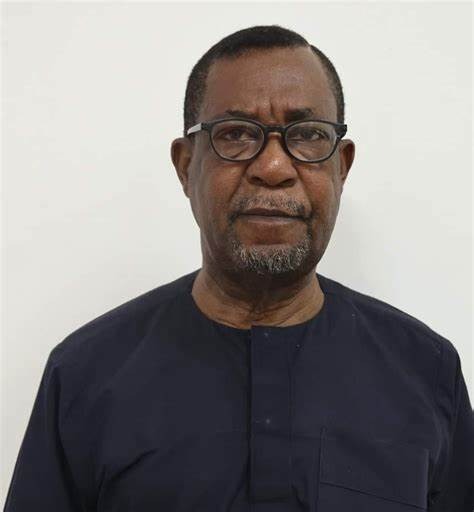

By Hassanat Adebowale
The trial of Dr. Olu Agunloye, former Minister of Power and Steel, took a significant turn on Monday as his objection to oral testimony by a prosecution witness prompted the Economic and Financial Crimes Commission (EFCC) to tender documentary evidence. Agunloye is facing allegations of $6 billion irregularities in the award of the Mambilla Hydroelectric Power Station contract in Taraba State.
The EFCC has charged Agunloye with forgery, disobedience of presidential directives, and gratification in a seven-count amended charge before Justice Jude Onwuegbuzie of the Federal Capital Territory(FCT) High Court in Apo. Agunloye has pleaded not guilty to all charges.
“In the charge, marked FCT/HC/CR/617/2023, EFCC alleged that Agunloye awarded contract for the Mambilla project in May 22, 2003 to Sunrise Power and Transmission Company Ltd (SPTCL) without any budgetary provision, approval and cash backing,” the prosecution stated. The EFCC further alleged that Agunloye received N5.212 million from SPTCL Ltd and Leno Adesanya, paid through Jide Abiodun Sotirin into his Guaranty Trust Bank account.
During the hearing, Umar Babangida, an Assistant Commissioner of Police seconded to the EFCC, testified as the third prosecution witness (PW3). Babangida detailed how the Attorney-General of the Federation petitioned the EFCC in October 2021, requesting an investigation into the contract approval granted to SPTCL Ltd in 2003.
Babangida explained that his investigative team obtained documents from the Corporate Affairs Commission (CAC) and the Federal Ministry of Power and Steel, revealing the incorporation details of SPTCL Ltd and records of the bidding process. He also described correspondence between the ministry and the presidency, including a letter from Agunloye to then-President Olusegun Obasanjo recommending Sunrise Power’s proposal as superior.
“The letter was addressed to Chief Olusegun Obasanjo, GCFR,” Babangida said. “The letter reminded the President of the earlier approval by the President for the Ministry of Power and Steel to conduct further negotiations between the ministry and Tafag Nigeria Ltd and Sunrise Power and Transmission Company Ltd.”
Defense counsel Adeola Adedipe, SAN, objected to Babangida’s oral testimony, arguing that it violated Section 128(1) of the Evidence Act. Adedipe insisted that the witness should not provide oral evidence on matters documented but not yet presented in court. The court upheld the objection, prompting the prosecution to tender the documents, which included the Attorney-General’s petition and investigation-related correspondence.
Justice Onwuegbuzie admitted the documents as exhibits and adjourned the case to April 30 for further hearing.
This case emphasizes the importance of following Nigeria’s detailed rules for contract approvals and compliance with anti-corruption laws. The Public Procurement Act mandates that major contracts receive federal executive approval and adhere to due process. Additionally, Sections 98 and 115 of the Criminal Code Act strictly prohibit public officials from accepting financial incentives for awarding government contracts.
The EFCC’s choice to use official records rather than oral evidence aligns with the Evidence Act, 2011, which gives priority to documented evidence in fraud cases. If Agunloye is convicted, he could face significant legal consequences, including a lengthy prison sentence and the forfeiture of assets.
Dear readers, we really need your support to keep on serving you with authoritative, truthful, and juicy stories everyday. For your support, please reach out to the editor @gavelinternational66@gmail.com