
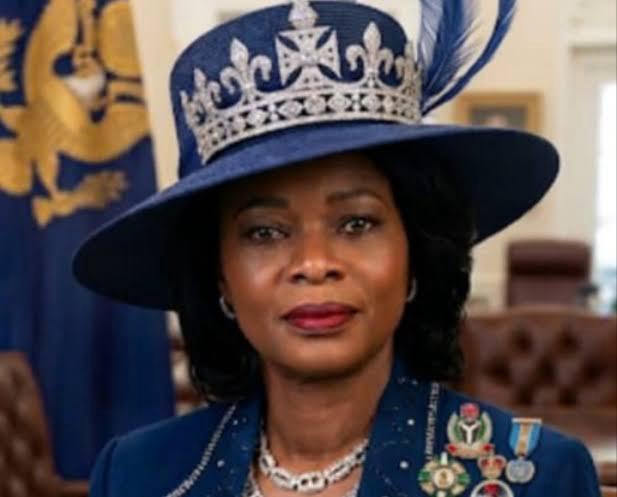

International support is gathering around the candidature of Akasoba Zainab Duke-Abiola, mni, as networks across Africa, the Caribbean and Latin America increasingly identify her as a compelling choice for the next Secretary-General of the United Nations (UN).
The Chief of Global Outreach for Akasoba’s United Nations Secretary General Campaign (UNSGC), Dr Jenny Clarence, stated this in a statement made available on Thursday
Mrs Duke-Abiola is the wife of the late Chief MKO Abiola, the acclaimed winner of the historic June 12, 1993 presidential election
just as Duke-Abiola is emerging as a candidate with an intercontinental foundation, expanding international support and a distinctly global mission.
It is instructive to note that her candidature has received significant momentum through the African Policy and Research Consortium (APRC), a pan-African policy and research network operating across more than 20 African countries and connecting scholars, policy leaders, research institutions, development practitioners and international partners across Africa and beyond.
Among the nations publicly associated with the wider support constituency surrounding her candidature are: South Africa — Strategic African Support; Rwanda — Reform Leadership Support; Egypt — Diplomatic African Support; Barbados — Caribbean Regional Support; Chile — Latin American Support; and the Kenya – Diplomatic African Support.
The wider APRC network also spans Nigeria, Ghana, the Democratic Republic of the Congo, Libya, South Africa and other African countries, with institutional links extending into the Caribbean, United Kingdom, United States and Canada.
Duke-Abiola’s growing international appeal rests on her ability to bridge regions and interests. A British-trained lawyer, jurist, human-rights advocate, cyber-security strategist, migration and border expert, and Distinguished Member of the National Institute, she brings a multidisciplinary record suited to the demands of contemporary global leadership.
Her platform places peace, preventive diplomacy, sustainable development, the rule of law, human dignity and stronger Global North–Global South cooperation at the centre of the United Nations agenda.
For supporting nations, Duke-Abiola’s candidature represents more than the advancement of one region. It offers an opportunity to strengthen African representation, women’s leadership, multilateralism and a more inclusive international order.
It is important to note that Chile’s support for her candidacy is crested on the fact that they rejected and withdrew support for their own national and two terms President- Ms. Michelle Bachelet.
The development is strategically relevant to Duke-Abiola’s positioning, because it shows that a candidate does not necessarily need support from her own country. Interestingly , couple of days ago, Ecuador’s Ms. Ivonne Abaki, a Lebanese was nominated by Tonga. Ditto for Burundi that nominated Senegal’s male candidate .
For the record, five women and three men are so far in the race to succeed outgoing UN Secretary General, Antonio Guterres of Portugal, who will complete his second five-year term on December 31, 2026 while nominations for the prestigious international position are still open, raising the prospect of further late entrants.
Among the nations publicly associated with the wider support constituency surrounding her candidature are: South Africa — Strategic African Support; Rwanda — Reform Leadership Support; Egypt — Diplomatic African Support; Barbados — Caribbean Regional Support; Chile — Latin American Support; and the Kenya – Diplomatic African Support.
The wider APRC network also spans Nigeria, Ghana, the Democratic Republic of the Congo, Libya, South Africa and other African countries, with institutional links extending into the Caribbean, United Kingdom, United States and Canada.
Duke-Abiola’s growing international appeal rests on her ability to bridge regions and interests. A British-trained lawyer, jurist, human-rights advocate, cyber-security strategist, migration and border expert, and Distinguished Member of the National Institute, she brings a multidisciplinary record suited to the demands of contemporary global leadership.
Her platform places peace, preventive diplomacy, sustainable development, the rule of law, human dignity and stronger Global North–Global South cooperation at the centre of the United Nations agenda.
For supporting nations, Duke-Abiola’s candidature represents more than the advancement of one region. It offers an opportunity to strengthen African representation, women’s leadership, multilateralism and a more inclusive international order.
It is important to note that Chile’s support for her candidacy is crested on the fact that they rejected and withdrew support for their own national and two terms President- Ms. Michelle Bachelet.
The development is strategically relevant to Duke-Abiola’s positioning, because it shows that a candidate does not necessarily need support from her own country. Interestingly , couple of days ago, Ecuador’s Ms. Ivonne Abaki, a Lebanese was nominated by Tonga. Ditto for Burundi that nominated Senegal’s male candidate .
For the record, five women and three men are so far in the race to succeed outgoing UN Secretary General, Antonio Guterres of Portugal, who will complete his second five-year term on December 31, 2026 while nominations for the prestigious international position are still open, raising the prospect of further late entrants.
Dear readers, we really need your support to keep on serving you with authoritative, truthful, and juicy stories everyday. For your support, please reach out to the editor @gavelinternational66@gmail.com