

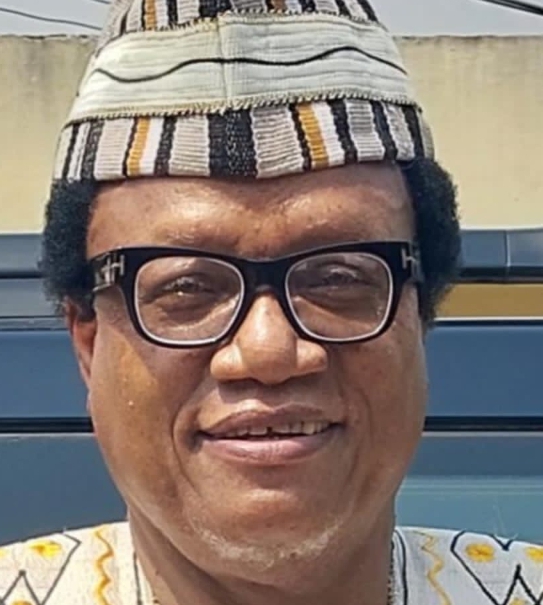

By Hope O’Rukevbe EGHAGHA
A man is a sum of his memories. So, says Ernest Hemmingway. Can I amend this to say that a man is a sum of his conscious memories? Can memory be unconscious? Or obliterated? If it’s unconscious, how can it be part of our memories? But psychologists assure us that that which happens to an infant child forms part of its memory! How is this possible? It is etched into his genes, in his experiences, into his psyche, so we are told.
The very cerebral and historically and culturally conscious Amilcar Cabral hit the nail when he asserted that ‘history is the memory of a people, and without memory, a people cannot be a nation’. My readers will wonder if the current placeholders in power all over Africa are conscious of this fact. The answer, my dear, is blowing in the wind!
‘In African thought’, writes Meta AI, ‘memory isn’t just personal nostalgia. It’s collective survival. That’s why griots, elders, and proverbs exist – they are the hard drive of the community’. But these days, even the elders depend on AI to see!
Conscious or subconscious, all experiences are a part of memory. Isn’t that dangerous for the stability of character especially if the negative experiences are dominant? Like the slave mentality.
A nation is a sum of its memories too. It is true that some nations or peoples suffer from collective amnesia. Deliberately enthroned collective amnesia. Or they pretend about the past. Or reconfigure it. Or alter it. Amend it. Twist and distort it. But the truth is eternal. Like Plato’s world of forms, it is in existence. Somewhat ideal. Our elders say that a blind man who pretends to be sleeping can only deceive himself. When he wakes up from his sleep he will still be blind!
That which constitutes our history, our past defines us. The definition may not be total. But it is part of our present. Our today. Our decisions. Our trajectory. For this reason, we must be intentional about what we plant as legacies, of what constitutes our history. What are the politicians doing with power? How can they for the sake of power allow innocent lives to perish in the wild in the hands of devilish abductors? How can a man who is entrusted with power, who fought for power, who grabbed power say he doesn’t want to do the right thing because he doesn’t want to step on toes! O God of Heaven! Where are you in the life of this nation? What have we done to deserve such callousness? Such contempt for the people?
We currently witness men in power who forget their role in the chain of things. Temporary. Ephemeral. Transient. Not bothered by how they will be remembered by the Giver of power. They forget how their progenitors or forbears fared on the power train. How tragic! How sad! How preposterous! This inability, this failure to learn from lessons of the past. How a nation remembers its past, shapes its identity, unity and policy direction.
There are individual memories. There are also collective memories. The agglomeration of individual memories may sometimes carry the bank and weight of the collective. But because we remember events differently this is not always the case. There are also institutional memories as well. We humans who people the institutions are the bank. Institutional memories can be documented in books, in microchips, in Clouds, and other safety devices. Such memories must be clear to successors of pioneers or place holders for them to serve their purpose.
But the memories of individuals are crucial to national development. A positive memory is more likely to stimulate loyalty, commitment, and faith in the future. And so we must etch things of eternal value in the minds of citizens. One of the channels of imparting positive memories is education, formal and informal. Education shapes the mind. It shapes attitudes. It sharpens one’s vision. A nation must therefore pay attention to the type and quality of education it imparts to its citizens. School curriculum, national holidays, naming are part of memorialization
Selective memory is also part of the challenge of nation building. The politics of exclusion and inclusion can affect the growth of the nation. Especially if this selective memory excludes a region or religion or a section of the nation because the powers-that-be do not want to see them! They are present physically in the geographical space. But absent from the table. So, they can be part of the menu. And I remember General Alli’s book “The Federal Republic of Nigerian Army: The Travails and Triumphs of Major Generals! I remember him saying he was Army Secretary as a minority. Decisions were taken which excluded his people. Yet he was commanded by military discipline to be physically present but absent, anonymous. Something like that.
Any nation with a sense of history must be concerned about memory. It is a sure way of creating a sound future. Where did we start from? How did we start? Where are we now? What’s our target? Is it for the common good?
But it is also dangerous to forget history, either by accident or intentionally. A nation which forgets why it fought a civil war is likely to have another one in its hands. I daresay that no nation can survive two civil wars and remains the same! Images of terror dominate the political space. There is no possibility that they have the number to overrun the geographical space. Yet their nuisance value is so high that it actually threatens our national cohesion.
Memorials are a form of memory documentation. They are markers. Identity pegs. What monuments do we subscribe to as a nation? Are there divisive or unifying monuments? The national anthem is a marker. When we went back to the old national anthem, it was nostalgic for my generation. It evoked something. It carried the air of credibility, of history, of inclusion. Lofty. Sublime. It is a different kettle of fish what the current political place holders are doing with it. Sounds nice and well to sing lustily ‘though tribe and tongue may differ but in brotherhood we stand’ only to confront palpable ugliness in the politics of exclusion in federal appointments or allocation of resources. Like a visit to the UK to attract funding to develop only the ports in Lagos. Sapele, PH, Burutu, Koko, and Calabar ports are crying for attention.
It is imperative for us to realize, to acknowledge, to factor in the idea that nation building isn’t just roads and GDP. It also includes who we were, who we are and who we want to be. The current trajectory of the political class shows that we did not imbibe enough lessons from the Abacha era. The Akan people of Ghana say that ‘when the roots of a tree begin to decay, it spreads death to the branches’.
Finally, the Yoruba say ‘a man who does not know where the rain began to beat him cannot say where he dried his body’. And I will never forget Achebe when he says whatever we do, we must not be compelled to ‘enter our house through another man’s door!
Dear readers, we really need your support to keep on serving you with authoritative, truthful, and juicy stories everyday. For your support, please reach out to the editor @gavelinternational66@gmail.com