

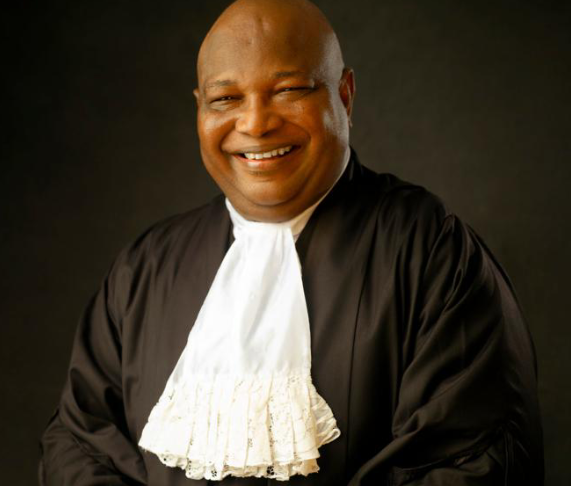

By Dr Wahab Shittu SAN
Why this transition should be recorded
In Nigerian universities, deanships change hands quietly. A handover note is signed. A valedictory session is held. Photographs are taken. Within a month the institution has returned to its ordinary business. The trouble with this habit is simple. A Faculty that keeps no record of what its leaders did cannot hold the next set of leaders to account for continuing the work, and each new administration is then free to start afresh.
I write, therefore, not merely to congratulate. My association with this Faculty is now in its fifth decade. I entered its classrooms as an undergraduate in the early 1980s and took my Bachelor of Laws degree here in 1986. I returned for my Master of Laws, which I obtained from the same Faculty in 1995. Since 2005 I have taught here as a member of the academic staff. I have therefore seen this Faculty as a student, as an alumnus and as a teacher.
In that time, I have watched several Deans give the Faculty the best of themselves. Each worked under the conditions of his or her own day. Each handed on an institution stronger than the one received. This Faculty has been built up in stages, and every administration in my time has added something to it. The tenure that ended on 31 July 2026 belongs to that line. It also moved quickly, and the particulars deserve to be written down while they are still fresh. What follows sets out, in one place, what was achieved, who has taken over, and what should happen next.
The Faculty in perspective
The Faculty of Law was established in 1962 as one of the foundation teaching units of the University of Lagos. Teaching began in October of that year. There were five members of academic staff, two Nigerians and three Englishmen, and twenty-six pioneer full-time students reading for a three-year Bachelor of Laws degree. A five-year part-time programme was added in January 1963 with thirty students. It ran until it was discontinued in 2006.
The Faculty’s founding purpose was set out in the Report of the UNESCO Advisory Commission which proposed the establishment of the University of Lagos. The Commission’s reasoning was that Lagos was the judicial, commercial and international centre of the Federation; that it held the largest concentration of legal practitioners in the country; that it was its fastest-growing industrial centre; and that it offered students an unmatched proximity to the Bench, the Bar and the federal legal services, both public and private. Lagos has long ceased to be the political capital, but every other limb of that reasoning holds today with greater force than it did in 1962.
The Faculty was divided into four Departments on 1 October 1977. They are the Department of Commercial and Industrial Law, the Department of Jurisprudence and International Law, the Department of Private and Property Law, and the Department of Public Law. That structure has survived nearly fifty years and still frames the teaching and research of the Faculty.
The curriculum has been revised repeatedly since 1962. The governing idea behind those revisions has been that law should be taught in the light of social, political and economic change, and that students should be brought to understand law not as an end in itself but by reference to its usefulness to society at home and abroad. The Faculty’s stated vision is to set the pace among law faculties in Nigeria and beyond in producing graduates of quality in research, learning and character. Its stated mission is to sustain high academic standards in both research and teaching. Those two sentences are the yardstick against which the agenda in Part VI of this paper is proposed.
Its members call it the Incomparable Faculty of Law. The claim is not an idle one, and the alumni roll is an intimidating one. As I write, three of the most important offices in Nigerian law are held by graduates of this Faculty. The Chief Justice of Nigeria, the Honourable Justice Kudirat Motonmori Olatokunbo Kekere-Ekun, GCON, read law at Akoka and took her Bachelor of Laws degree in 1980. The newly elected President of the Nigerian Bar Association, Mrs. Oyinkansola Badejo-Okusanya, SAN, is a product of this University and of this Faculty. She is only the second woman to lead the Association and the first to be elected to that office directly by the membership. The Chief Judge of the High Court of the Federal Capital Territory, the Honourable Justice Husseini Baba-Yusuf, studied law here between 1980 and 1983.
We also have Justices of the Supreme Court and of the Court of Appeal, Attorneys-General of the Federation and of the States, many Senior Advocates, general counsel of the largest enterprises in the country, regulators, academics and career public servants. All of them first read law in the classrooms at Akoka. A Faculty whose graduates at the same time head the Supreme Court, the organised Bar and the busiest High Court in the federal capital does not need to argue its case. That reputation belongs to no single administration. It is a trust, received from those who came before and owed to those who come after.
Those of us who read law here in the 1980s knew a smaller and poorer Faculty than the one that exists today. Two of the three office holders named above passed through the same lecture halls within a few years of my own time. The library was thin and the lecture halls were plain. Nobody spoke then of endowments or of dual degrees. What the Faculty had instead was a settled belief that the best legal education in the country was being given at Akoka, and teachers who behaved accordingly. The material position has improved beyond recognition in the four decades since. The duty of every administration, including the one now beginning, is to see that the belief improves with it.
Professor Adejoke Oyewunmi, who assumed office on 1 August 2026, is the twentieth person to lead the Faculty. She is only the third woman to do so, after Professor C. K. Agomo and Professor Ayodele Atsenuwa.
The outgoing Dean: Professor Abiola Olaitan Sanni, SAN
Professor Sanni became Dean after a keenly contested election held on 5 July 2024, in which three Senior Advocates of Nigeria stood. He succeeded Professor Ige Omotayo Bolodeoku, who had led the Faculty from 2020. He served a single term of two years.
He obtained his doctorate in Commercial Law, with a specialisation in taxation, from the University of Lagos in 2010. He became an Associate Professor in 2013.
In 2016 he was appointed Professor of Commercial Law and, at the same time, occupier of the Professorial Chair endowed by the Lagos State Government for the Advancement of Taxation and Fiscal Matters. The double appointment earned him the description of a “Double Professor”, believed to be the first of its kind at Akoka in recent memory. He was admitted into the Inner Bar as a Senior Advocate of Nigeria in 2021.
His record of public service is substantial. He was Chairman of the National Tax Policy Review Committee in 2016 and Chairman of the National Tax Policy Implementation Committee in 2017. He has been a member of the Presidential Fiscal Policy and Tax Reforms Committee since 2023. In scholarship, he is the editor of Introduction to Nigerian Legal Methods, the standard introductory text in Nigerian and West African law faculties, and the author of Introduction to Nigerian Business Law. He founded the Nigerian Revenue Law Reports and the African Tax Law Reports, and is Editor-in-Chief of both. They are the first law reports devoted to tax decisions in Nigeria and in Africa respectively. He is a Fellow of the Chartered Institute of Taxation of Nigeria, a Fellow of the Nigerian Institute of Chartered Arbitrators, and a life member of the Nigerian Society of International Law.
One detail matters for the argument later in this paper. The Dean who spent two years asking alumni and friends of the Faculty to endow it himself occupies a chair endowed by a benefactor. He knew from his own career what a single act of endowment can do.
The record of the Sanni deanship
Two years is a short time in a Faculty that has shaped the Nigerian legal profession for more than six decades. It is barely enough to identify problems, let alone to solve them. The description of this administration as purposeful and transformational is therefore not mere courtesy. It reflects how much was done in a short period. The record falls under five heads.
(a) Students and academic performance
In 2026 two undergraduates of the Faculty, Kaosisochukwu Andrina Nkpolara of the 500 Level and Israel Idara Ifiok of the 200 Level, became World Champions at the World Intellectual Property Organization Intellectual Property Moot Court Competition held in Switzerland. They came ahead of teams from 214 law schools. The point is worth stating simply. A Nigerian public university, working under all the constraints that this implies, came first in the world in one of the most technical fields in modern law. The team was coached by Professor Oyewunmi and her colleagues in the Intellectual Property group.
At the Nigerian Law School, the Faculty produced forty-three First Class graduates in one Bar Final cycle and thirty-four in the next. Each set was formally received back at a homecoming ceremony in the Faculty Boardroom, which was itself a useful innovation. The Faculty also kept its place in advocacy competitions at home and abroad. Results of this kind are not accidents of admission. They come from teaching, mooting and mentoring, and each generation of teachers must keep those habits alive.
(b) Internationalisation and partnership
The UNILAG–University of Dundee Dual LL.M. Programme gave postgraduate students a clear route to a second, internationally recognised qualification without leaving home. The Women in Legal Academia (WiLAC) Project brought to Akoka work of continental importance for the advancement of women in the legal academy. Together, these two initiatives moved the Faculty from an institution that is occasionally noticed abroad to one that takes part in the international conversation as of right.
(c) Physical transformation
Anyone who has walked through the Faculty in the last two years has seen the change. Fundraising and partnership with alumni and friends of the Faculty paid for the renovation of major teaching and administrative facilities and for better digital and alternative energy infrastructure. Three landmark projects were started: the Faculty Elevator, the redevelopment of the Faculty Library, and the proposed new Faculty building.
The elevator is easy to underrate. It is a statement about dignity. Every member of this Faculty, including the elderly, the infirm and the visitor who cannot manage stairs, should be able to reach every part of the building. Spending of that kind is not vanity. It is a Faculty’s values put into practice.
(d) Alumni relations
The most lasting innovation of the tenure was the decision to treat alumni relations as a means of development rather than as a social courtesy. A Constitution for the proposed Faculty of Law Alumni Association was adopted. Its General Assembly was inaugurated. Plans were laid for a professionally managed Alumni Relations and Advancement Office.
The reasoning is sound, and it is still not acted upon often enough in Nigerian public universities. A law faculty’s greatest asset is not its buildings, or even its library. It is the goodwill of the judges, Senior Advocates, general counsel, regulators, businesspeople and public servants who once sat in its classrooms. Turning that goodwill into steady and properly accounted-for support is the surest way to make an institution self-sufficient. Professor Sanni did not simply ask alumni for help. He began to build the machinery through which they can give for decades after he has left office. That machinery, rather than any single building, is his most valuable legacy.
(e) Governance, staff and student welfare
Alongside the visible achievements ran a quieter discipline: transparency in the handling of Faculty finances, inclusiveness in decision-making, attention to the welfare of staff and students, and the deliberate building of partnerships with the Bench, the Bar, the regulators and the private sector. These are the least visible of a Dean’s duties. They are also among the most important, because they decide whether a successor inherits a working institution or a set of unfinished obligations.
He leaves the Faculty stronger than he met it. That is the test that counts, and he has passed it.
The incoming Dean: Professor Adejoke Oyewunmi
Professor Oyewunmi takes office with strong credentials. She holds an LL.B. from Obafemi Awolowo University, postgraduate degrees from the University of Lagos, an LL.M. in Intellectual Property from the Franklin Pierce Law Center, University of New Hampshire, and a Ph.D. from Obafemi Awolowo University. She was called to the Nigerian Bar in 1989 and has taught at Akoka for more than three decades.
She is among the country’s leading authorities on Intellectual Property and Labour Law. Both fields sit where law meets technology, enterprise and the dignity of the working person. Her international exposure is broad. She has held fellowships at the Max Planck Institute in Munich, the Franklin Pierce Law Center, the International Labour Organization International Training Centre in Turin, and Africa University, Mutare. Her published works include Nigerian Law of Intellectual Property (2015), Handbook of Business Law (2017), Intellectual Property Law, Practice and Management: Perspectives from Africa (2018), and Rethinking Commercial and Industrial Law in Nigeria: Essays in Honour of Professor Chioma Kanu Agomo (2023). She serves as Legal Adviser to the West and Central Africa Division of the Seventh-day Adventist Church.
She comes to the Deanship from within the administration, having served as Sub-Dean and as Coordinator of the Master of Laws programme. She therefore needs no time to learn the machinery. She also takes office in the same year in which she coached a team to a world championship. The Faculty could hardly have asked for steadier hands.
An agenda for the Oyewunmi deanship
Congratulation is easy. Expectation is the more honest compliment. What follows is offered by a colleague, in that spirit, and in the knowledge that no Dean can do all of it in two years. It is set out so that it can be used by the Dean, by the Faculty Board, by the Alumni Association, and by whoever comes next.
1. Finish what has been started. The redevelopment of the Faculty Library and the proposed new Faculty building have been begun but not completed. Capital projects abandoned halfway are a common fate of institutional ambition in Nigeria, and they are expensive. What is needed is a published completion timeline, a ring-fenced project account, a project committee with real quantity-surveying and audit capacity, and regular progress reports to the Alumni General Assembly.
2. Turn the alumni body into an endowment. The Constitution exists and the General Assembly has been inaugurated. The harder work now follows: a funded and professionally staffed Advancement Office, a verified alumni database, an annual giving programme, and in time a Faculty Endowment able to support endowed chairs, endowed scholarships for students in need, and an endowed moot court fund. The outgoing Dean’s own chair shows what this can achieve. Income of that kind does not depend on the annual budget or on the fortunes of any government. I make this point as one of the alumni to whom the appeal is addressed. Those of us who took our first degrees here in 1986 and our masters here in 1995, and who have done well in practice on the strength of that training, are the very people who should be giving, and giving regularly, rather than waiting to be honoured at a dinner.
3. Teach the law our graduates will actually practise. Practice in Lagos now turns to a large extent on artificial intelligence and algorithmic accountability, data protection and privacy, financial technology and digital assets, energy transition and climate law, competition law, sports and entertainment law, and the legal framework of the African Continental Free Trade Area. Much of this is already taught somewhere in the curriculum. It should be moved from the margin to the centre. This must be done without weakening the grounding in contract, torts, land law, evidence, criminal law and constitutional law on which everything else rests.
4. Keep the teachers. Nothing on this list matters more. The departure of young Nigerian academics is not a rumour. It can be measured, and a Faculty can lose ten years of succession planning in three. What is needed is structured mentorship of junior colleagues, sponsored doctoral completion, protected research time, support for conference attendance, and a promotion path that is transparent and clearly based on merit. Research fellowships funded by alumni are an obvious tool.
5. Aim to be cited, not merely published. The Faculty should measure its scholarship by its influence in the Supreme Court, in the National Assembly, before regulators, and among scholars outside Nigeria. That requires a properly peer-reviewed and indexed Faculty journal appearing on schedule, research clusters built on real strengths rather than on individual convenience, the institutional capacity to compete for international research grants, and a settled practice of making formal submissions on Bills before the legislature and on law reform proposals.
6. Build on the Dundee programme. The dual LL.M. is a model, not an end point. Further dual-degree and exchange arrangements, staff exchange, visiting professorships in both directions, and joint research with African, European, Asian and North American partners would extend it. Partnerships within Africa deserve particular attention. A Faculty of this standing should be a hub for African legal scholarship, and not only a participant in networks based in the North.
Make intellectual property and innovation the Faculty’s signature.
The new Dean’s own field has just produced a world title, and the opening is obvious. A Centre for Intellectual Property, Innovation and Technology Law would give the Faculty a distinct national identity and a source of consultancy income. It could work with the University’s own technology transfer needs, with Nigeria’s creative industries, with start-up companies, and on the reform of our ageing intellectual property statutes.
8. Take the Law Clinic seriously. A law faculty in Lagos sits at the centre of Nigeria’s shortage of access to justice. An expanded Law Clinic, structured externships with courts, chambers, regulators and public-interest organisations, and organised pro bono work would sharpen students’ practical skills and discharge a real social duty at the same time. Employability and clinical exposure are two names for one investment.
9. Attend to students as persons. This means career services and structured placement support, mentorship pairings with alumni, pastoral and mental health support, and an accessible hardship fund. It also means the unglamorous work of releasing results on time, issuing transcripts without difficulty, and answering complaints. Administrative responsiveness is a welfare policy by another name.
10. Consolidate gender equity. The WiLAC Project is an asset that should outlast its funding. Its gains should be written into Faculty policy on mentorship, on promotion, on research support, and on representation in leadership. That is how the fourth female Dean becomes unremarkable.
11. Institutionalize engagement with the Bench and the Bar. The Faculty sits in the busiest legal market in West Africa. A standing programme of judicial and professional colloquia, adjunct teaching by practitioners of standing, and a Faculty voice in the reform of procedure and the administration of justice would return the Faculty to the centre of national legal debate, where it belongs.
12. Preserve the governance culture. Transparency in finances, inclusiveness in decision-making, and continuity between administrations are not mere housekeeping. They are what allow each Dean to build on a predecessor instead of starting again. The proper tribute to Professor Sanni is not a plaque. It is the continuation of the standards he set.
7. A personal word
Handovers are where institutions most often lose their way. This one was handled well on both sides. The outgoing Dean left without treating what he had built as his own property. The incoming Dean praised the achievements of his administration before she inherited them. That is how these things should always be done, and it reflects credit on both of them.
I have belonged to this Faculty in one capacity or another since I first sat in its lecture halls as an undergraduate. It taught me law in the 1980s. It refined me in the 1990s. It has employed me since 2005. Whatever standing I have at the Bar rests on a foundation laid at Akoka. That is not sentiment. It is a statement of a debt, and it is why I regard the agenda above as an obligation shared by every alumnus rather than a wish-list handed to a new Dean.
Professor Abiola Sanni, SAN, returns to his classroom, his chambers and his scholarship with the gratitude of a Faculty he served well. Professor Adejoke Oyewunmi takes office with its confidence and its expectations, both of which are considerable. This Faculty has never lacked talent. What it needs now is continuity of purpose, serious leadership, and alumni who are willing to fund the ambition they say they share.
If the next two years build on the last two, the Incomparable Faculty of Law will be more than an affectionate description. It will be a plain statement of fact. We wish the new Dean a tenure of distinction.
Dr. Wahab Kunle Shittu, SAN, teaches law at the faculty of law, University of Lagos. He is the Principal Partner of W. K. Shittu & Co. He writes from Lagos.
Dear readers, we really need your support to keep on serving you with authoritative, truthful, and juicy stories everyday. For your support, please reach out to the editor @gavelinternational66@gmail.com