


By Owei Lakemfa
The French, following its revolution in 1790, gave humanity the enduring slogan “Liberty, Equality, Fraternity” They are ideals worth dying for; but the same French turned out to be some of the most bestial colonialists for whom human life meant nothing.
The French colonialists were so vicious that famous African psychiatrist, Franz Fanon who studied the psyche of the French, in his 1961 book ‘The Wretched of the Earth’ advised his fellow Africans: “ Let us waste no time in sterile litanies and nauseating mimicry. Leave this Europe where they are never done talking of Man, yet murder men everywhere they find them, at the corner of every one of their own streets, in all the corners of the globe. For centuries they have stifled almost the whole of humanity in the name of a so-called spiritual experience. Look at them today swaying between atomic and spiritual disintegration.”
Despite its super power status, the French had been repeatedly defeated. On November 18, 1803, Black slaves in Haiti roundly defeated its military and seized independence. Until today, 223 years later, France still seeks a pound of flesh from Haiti. It remains bitter.
In the Second World War, France became a subject of Hitlerite Germany and had to be helped by its European cousins to regain independence. Despite such an experience, France returned to the international scene once again to subject its pre-war colonies to vicious rule. But some resisted.
In one of the most humiliating cases, the Vietnamese militarily defeated the French in the 1954 Battle of Dien Bien Phu in which over 16,000 French soldiers never returned home.
Perhaps the most brutal war of recolonization the French waged was against the Algerian people. It was so determined to make that beautiful African country its region that France drowned the territory in rivers of blood. It murdered about two million Algerians in its insane mission. It destroyed over eighteen thousand villages, used chemical weapons and, employed the same system of concentration camps Adolf Hitler had used a decade before in Europe.
But it encountered a determined people for whom it was either liberty or death.
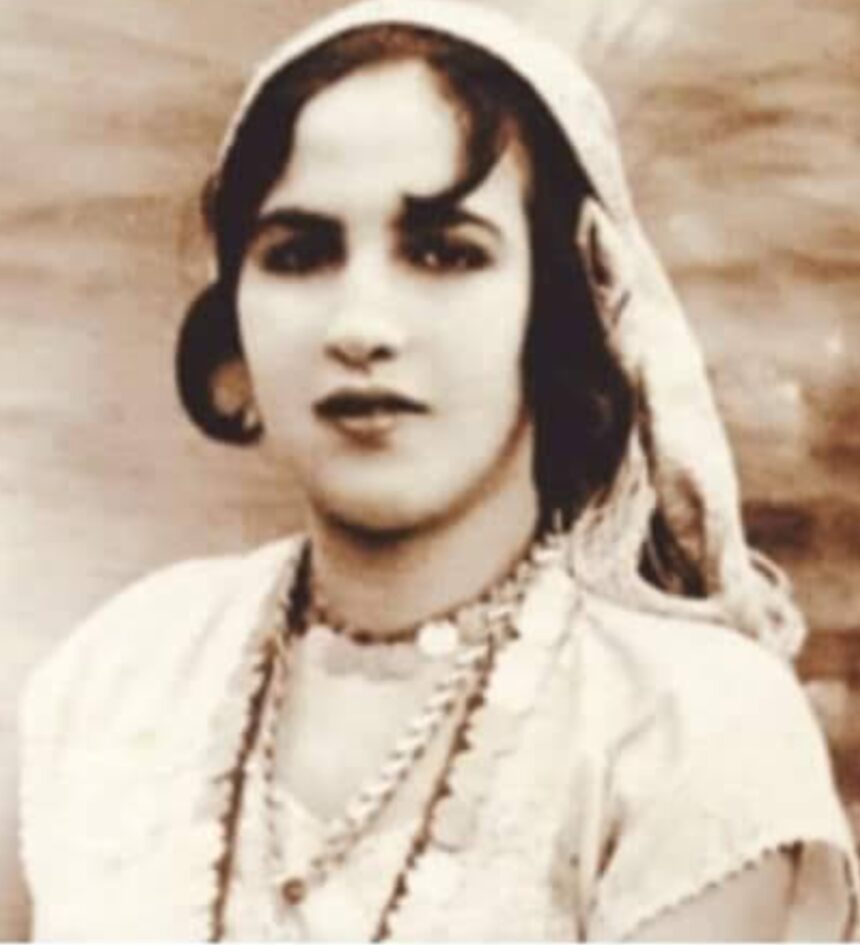
One of the most strident expressions of the Algerian resistance was Zuleikha Al-Shayeb a fighter of the National Liberation Front, FNL. The French were particularly terrified of the Algerian woman because they understood that to defeat the resistance, they first had to defeat the women. Fanon who studied the French psychology, in his 1959 essay ‘Algeria Unveiled’ wrote about the French thought process on the Algerian woman: “If we want to destroy the structure of the Algerian society, its capacity for resistance, we must first of all conquer the women; we must go and find them behind the veil where they hide themselves and in the houses where the men keep them out of sight.” He said behind the veil: “This woman who sees without being seen, frustrates the colonizer.” The women in their traditional garments and while veiled, were couriers of weapons and grenades.
Zuleikha was an educated woman with a privileged background who could easily have lived a life of luxury. Rather, she elected to join the armed resistance against French occupation.
She was captured by the French who rather than treat her as a Prisoner of War, POW in accordance with the August 12, 1948 Geneva Convention, decided to tortured and brutalize her. On October 15, 1957, the French produced her in the streets of Algiers. She was chained to a land rover and driven on the streets. As they dragged her on the roads, peeling off her skin and causing her bodily injuries, the French, using loud speakers, was telling Algerians that this would be the: “fate of those who resist French rule” They added that: “ France will show no mercy, not even to women.”
This was hardly surprising because this was the tradition of the French; show no mercy no matter what. During its revolution, the French guillotined King Louis XVI. This did not stop them later, on October 16, 1793, from beheading his Queen, Marie Antoinette.
Despite the pains and her life-threatening state, Zuleikha did not beg for mercy. As was said: “They dragged her body, but could never break her spirit.”
Her actions defeated the aims of the French and, further emboldened the people. The French tortured her for ten days and thereafter put her in an helicopter and dropped her in a dense forest where she fell to her death. Nothing more was heard about her and, the French did not disclose the location she was dropped.
However, in 1984, that is twenty seven years later, an Algerian villager who had come across her corpse and buried it, came forward. Zuleikha was positively identified.
She is a symbol of the resilience and resistance that is the African woman. Like the Zulu proverb says: “You strike a woman, you strike a rock” Zuleikha was a rock the French struck. She is a testimony against French colonial brutality and why we must insist that the colonialists apologize to Africa and pay reparations for the Transatlantic Slave Trade and colonialism.
On its part, France did not formally acknowledge its atrocities in Algeria until Thursday, September 13, 2018 when President Emmanuel Macron admitted to some of the atrocities. He also announced that France was committed to: “the opening of archives on the subject of disappeared civilians and soldiers, both French and Algerian”.
Macron spoke in the specific case of Assistant Professor of Mathematics at the University of Algiers, Maurice Audin, an independence activist who in 1957: “died under torture stemming from the system instigated while Algeria was part of France”
The French had told Josette, the widow of Audin that her then 25-year old husband had escaped while being transferred between jails. It was not until 2014, that is 57 years later, that then President Francois Hollande admitted that Audin had been killed in detention.
Macron also acknowledged that the French Parliament in 1956 gave the French military special powers to arrest, detain and interrogate any suspect adding that those special powers: “laid the ground for some terrible acts, including torture which became a weapon considered legitimate” He added that: “The battle of Algiers was the most repressive period of the Algerian War…There were many abuses. It was then that there were the most cases of torture.”
As if avoiding a crime scene, no President of France visited Algeria until thirteen years after the war when Valéry Giscard d’Estaing made an official visit to independent Algeria.
Algeria went on to play decisive roles in the liberation struggles in Africa including providing funds and training for liberation fighters like Nelson Mandela. May the souls of the Algerian patriots rest in power.
Dear readers, we really need your support to keep on serving you with authoritative, truthful, and juicy stories everyday. For your support, please reach out to the editor @gavelinternational66@gmail.com