


By Mustapha Ogunsakin
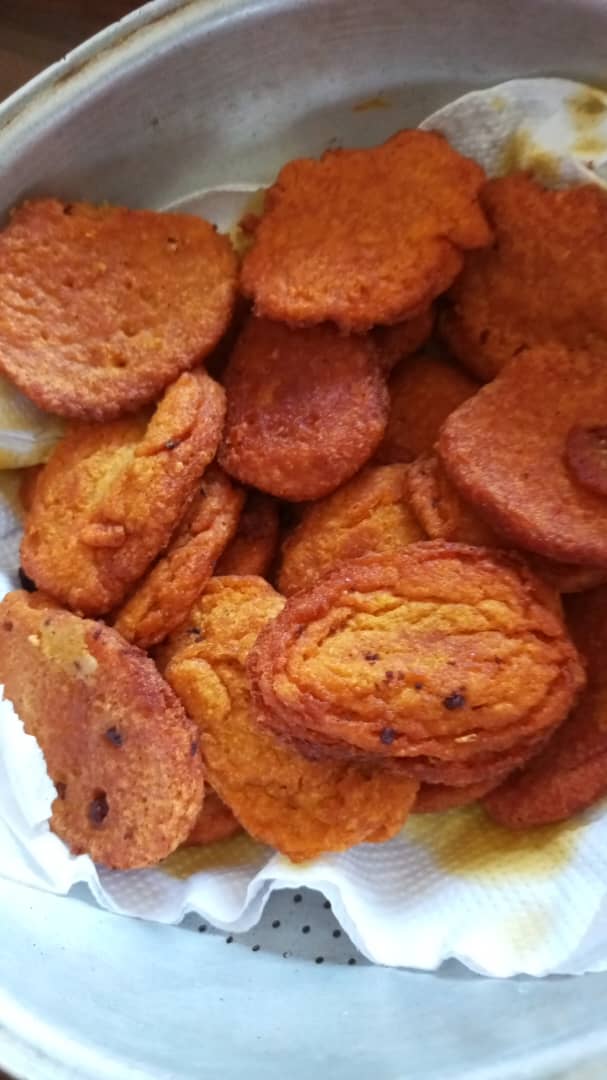
All of a sudden, Akara—my favourite Saturday breakfast meal—has become the subject of national and political debate.
Even this morning, my darling wife, Tinuke, prepared the delicacy with Ogi (corn pap) for me. She has her own special way of making Akara. She spices it with shrimps, pepper, and onions, which makes her Akara uniquely delicious and flavourful. Her Ogi is blended with garlic, ginger, turmeric, and omidun (condensed corn water). According to her, this combination is good for my health. She then adds a little honey for taste. Tinuke surely has a way of taking care of her husband.
Since the First Lady, Her Excellency Oluremi Tinubu, mentioned Akara as a tool of empowerment, the internet has gone berserk. Some derided her, claiming she mocked the poverty of women. Others used her statement to score political points and attack her husband, the President. They argued that the Tinubus do not mean well for women or for the country.
I do not know much about Mrs Tinubu. I only met her once during the first New Year Thanksgiving Service held by the Lagos State Government House, Marina, in 2000. Her husband was then the governor.
That service was largely organised by Prof. Yemi Osinbajo, SAN, who was then the Attorney General and Commissioner for Justice. As a Judicial Reporter with The Guardian Newspapers, I was invited to the event, along with other reporters.
Tinuke, who was heavily pregnant with our first daughter at the time, attended with me. As is common with pregnant women, she frequently needed to use the restroom. Mrs Tinubu noticed this and personally escorted her to the ladies’ room twice before asking her orderly to stay with Tinuke throughout the event.
I have never met her again since then.
That is the Mrs Tinubu I remember: a woman helping a pregnant first-time mother and trying to ease her discomfort. Meanwhile, that “pregnancy” is now a young woman—and a lawyer.
What is clear to me from the way Mrs Tinubu speaks is that she appears to be an Atapata dide—someone who grew up through harsh conditions of life. She is not an ajebutter (a child of privilege). It is often those who have experienced hardship who understand the struggles of women at the lower rungs of society and in rural communities—women who, with very little, still manage to raise successful children.
The jobs we sometimes demean and look down on were the same jobs our mothers used to raise us.
I was not too young to remember when Mama Tafa would carry clothes in a tray and walk through the streets of Ado-Ekiti and neighbouring towns, hawking her wares. My mother did this for years before she was financially buoyant enough to acquire a stall at Erekesan Market.
Back then, we children woke up very early to go to the warehouse and carry loads of clothes to her stall. She did this for years before eventually acquiring her own shop in the same market.
Mama used that trade to support my father in raising us. She contributed her quota to the family business and to our development.
Today, Mama is 89 and retired. From the proceeds of the trade she started on a small scale, she built a house that still generates rental income for her in old age.
Many women like my mother—and perhaps Mrs Tinubu’s mother—passed through this crucible. They started small, worked hard, progressed, and built success out of their lives. Today, we are products of that hard work, and we owe much of our success to them. As children helping our mothers, we unknowingly learned our first lessons in commerce—lessons that later taught us how to identify opportunities before others did.
And yes, Akara and other seemingly ordinary trades can become powerful tools for economic empowerment.
About 25 years ago, I met a young couple who, like us at the time, were newly married.
The husband, despite being a graduate, worked as a security guard in a company. His wife worked as an unskilled teacher earning less than ₦10,000 in a private nursery and primary school. Perhaps because he often saw me dressed in suits and driving a car, he constantly sought my help in finding a better job. They lived in an uncompleted building near our residence. My wife and I always tried to support them with foodstuffs and whatever little cash we could spare.
One Saturday morning, in appreciation for our support, both husband and wife came to our home carrying Ogi and Akara. The two families settled down to a sumptuous breakfast. After tasting the Akara, I realised it was exceptionally delicious. I asked whether she made it herself, and she said yes.
Immediately, I thought this couple might have found a means of livelihood that could sustain them. I suggested she go commercial and begin frying Akara at the bus stop. Her answer was yes—and you could see hope in her eyes. I asked my wife and her to estimate the startup cost. They came back with a budget of ₦6,000. I went to the bus stop, spoke with some people, and they allocated a space for her.
The next day, both women went to Ile-Epo Market and bought an agbada (frying pan), beans, and other ingredients. She began operations the following day using firewood.
That singular action changed their fortune.
Today, they have moved on and handed the same business to others who are less fortunate. The woman currently frying Akara at that same spot has expanded the operation significantly.
Whenever I pass by, I see no fewer than five people working there.
Bread sellers have also joined the ecosystem, supplying bread so customers can eat their Akara with bread. Different brands of bread.
Those who sell solid pap are there too, giving buyers options between solid pap and bread.
The place has become a thriving hub where people gather to buy inexpensive meals.
So who says Akara cannot be a veritable tool for business development?
Dear readers, we really need your support to keep on serving you with authoritative, truthful, and juicy stories everyday. For your support, please reach out to the editor @gavelinternational66@gmail.com