

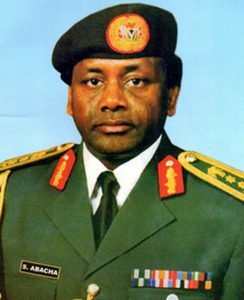

Former Minister of Petroleum Resources, Chief Senator Dan Etete, has challenged former intelligence officer Dennis Amachree to produce documentary evidence supporting his account of the circumstances surrounding the death of former Head of State, General Sani Abacha.
Etete’s reaction followed a report by The Guardian on July 21, 2026, on claims contained in Amachree’s memoir concerning the final hours of Abacha.
Describing the account as unsubstantiated, Etete questioned why Nigerians should accept a detailed narrative about the death of a former Head of State 28 years after the event when, according to him, the author had provided no independent evidence to corroborate his recollection.
Etete said Amachree had failed to identify the woman whose alleged account forms a central part of his narrative, or demonstrate that she had ever confirmed the claims attributed to her.
He also demanded the production of the post-mortem report, interrogation records, file numbers, signed statements, duty logs, visitor registers and medical findings that could independently establish what happened on the night Abacha died.
“Twenty-eight years on, from memory, with nothing on paper behind any of it,” Etete said, arguing that Amachree could not reject other accounts for lack of evidence while relying on his own unsupported recollection.
He asked: “Where is the post-mortem report? Who is this woman, is she alive, and has she confirmed this? Where is the record of the interrogation—the date, the place, the signature? What file number covers it?”
Etete also demanded the identity of the officer Amachree allegedly telephoned and asked whether the officer had corroborated any part of the account.
“What flight manifest, what hotel register, what duty log supports any part of this timeline? On what medical authority was the cause of death determined, and by whom?” he asked.
According to him, these were legitimate questions that should have clear answers, particularly because the matter involved the death of a sitting Head of State.
“None of these are unreasonable questions. Every one of them should have an answer. Not one of them has been answered,” he said.
Etete stressed that he was not speaking as a lawyer or spokesman for Abacha, but as a former member of the administration who knew the late Head of State personally.
“I served in that government. I knew the man, and I know him as a close friend. And I am telling you plainly: I do not believe a word of this,” he declared.
He further questioned why the account had allegedly never surfaced during the numerous inquiries and controversies surrounding Abacha’s death over the past 28 years.
“In twenty-eight years, through every inquiry and every commission, through all the years when the people close to that night were still alive and still talking, this account was never once raised. Not to me. Not to anyone I know. It surfaces now, for the first time, in a book with a price on it,” Etete said.
He maintained that while the historical record of the Abacha era remained open to debate, claims concerning the death of a former Head of State should be supported by verifiable evidence.
Etete also demanded answers concerning the unnamed woman, including her name and nationality, why she was allegedly allowed to leave Nigeria without a serious criminal investigation, and who authorised her release and subsequent departure from the country.
“General Sani Abacha was not an ordinary man or citizen of Nigeria. For such an important case which involves the country’s President, it should not be taken lightly and handled by you alone,” he said.
Etete accused Amachree of seeking publicity and relevance through the revelations contained in his memoir.
“Let me be very clear here that you are simply seeking cheap publicity and relevance,” he alleged.
He concluded that until Amachree produces verifiable documentary evidence—including the identities of those involved, investigation records, authorisation for the woman’s release and departure, and relevant medical and official records—his account should not be treated as established historical fact.
“The account remains unverified, unsupported and unconvincing. It should not be trusted. It reads as little more than a salacious attempt to attract attention and sell a book,” Etete said.
Dear readers, we really need your support to keep on serving you with authoritative, truthful, and juicy stories everyday. For your support, please reach out to the editor @gavelinternational66@gmail.com