

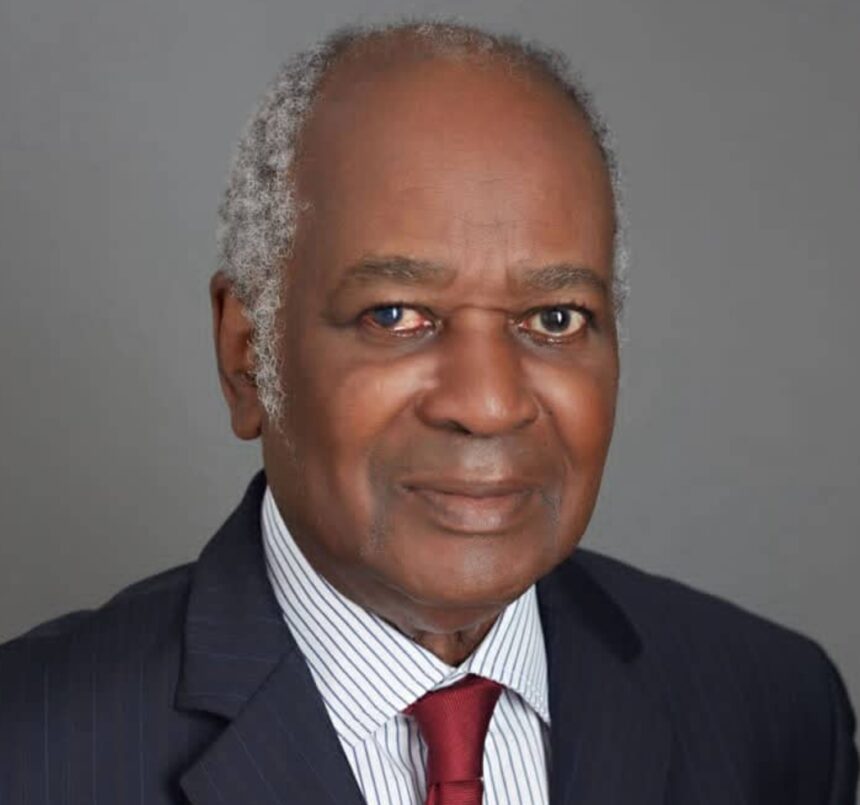

How Prof. A.B. Kasunmu, SAN, led the historic legal battle that declared Nigeria’s Interim National Government illegal
In the turbulent aftermath of the annulled June 12, 1993 presidential election, Professor Alfred Bandele Kasunmu, SAN, turned to the courts in a bold constitutional challenge that shook the foundation of Chief Ernest Shonekan’s Interim National Government and left an enduring imprint on Nigeria’s legal history.
There are moments in the history of a nation when the courtroom becomes much more than a place where disputes are settled. It becomes an arena in which the legitimacy of power itself is tested.
One such moment came in November 1993, barely three months after General Ibrahim Babangida stepped aside as Nigeria’s military ruler and handed over to an Interim National Government headed by Chief Ernest Shonekan.
At the centre of the ensuing legal battle was a distinguished professor of law and Senior Advocate of Nigeria, Professor Alfred Bandele Kasunmu.
Kasunmu was not a politician. He was not a military officer. He did not command troops or occupy any political office at the time.
His weapon was the law.
And with it, he led a legal challenge that ultimately produced one of the most remarkable judicial pronouncements of the troubled post-June 12 era.
On November 10, 1993, Justice Dolapo F. Akinsanya of the Lagos High Court delivered a landmark judgment declaring the legal foundation of the Interim National Government invalid.
The judgment struck at the heart of the Shonekan administration and became one of the most consequential courtroom episodes in Nigeria’s constitutional history.
For Kasunmu, it was another demonstration of what the law could achieve when deployed with courage, precision and intellectual discipline.
A nation in crisis
To understand the significance of the case, one must return to June 12, 1993.
That presidential election had generated enormous expectations across Nigeria. Bashorun Moshood Kashimawo Olawale Abiola, the presidential candidate of the Social Democratic Party, was widely regarded as having won the election.
But the military government headed by Babangida annulled the election before the result could be formally concluded and handed over to the winner.
The annulment plunged the country into a political crisis.
Pressure mounted on Babangida, and on August 26, 1993, he announced that he was stepping aside.
A civilian-led Interim National Government was subsequently established, with Chief Ernest Shonekan, a prominent businessman and former chairman of the United Africa Company, as its head.
The arrangement was intended to provide a bridge to democratic government.
Instead, it became the subject of a fierce constitutional and political controversy.
The question was simple but explosive:
What was the legal foundation of the government?
It was a question that would eventually find its way to the Lagos High Court.
Kasunmu enters the battle
Professor Kasunmu and his colleagues approached the controversy from a distinctly legal angle.
Rather than allowing the litigation to become simply another battle over the June 12 election, the legal team concentrated on the legality of the instrument by which the Interim National Government had been established.
The action was filed before the Lagos High Court as Suit No. M/573/93, involving Abiola and Ambassador Babagana Kingibe.
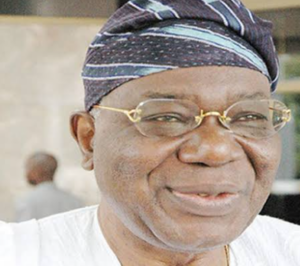
Kasunmu appeared as lead counsel for the applicants, supported by a team that included Senator Abraham Adesanya, Chief Oladipo Jimileyin, Otunba Olabiyi Durojaiye, Miss A. Sanusi and Mr. O. Suban.
Their argument went to the root of the matter.
The legal challenge centred on Decree No. 61, the instrument purporting to establish the Interim National Government.
The applicants questioned whether Babangida, having relinquished power on August 26, could validly exercise legislative authority thereafter.
It was an ingenious legal strategy.
The lawyers did not make the immediate installation of Abiola as president the central issue. Instead, they sought to establish that the government that had emerged after Babangida’s departure had no valid legal foundation.
It was a challenge to the architecture of power itself.
The historic judgment
On November 10, 1993, Justice Dolapo Akinsanya delivered her judgment.
The court found the legal foundation of the Interim National Government defective and declared Decree No. 61 invalid.
The effect was devastating for the administration headed by Shonekan.
The judgment did not merely criticise an aspect of the government’s formation. It questioned the very legal authority upon which the Interim National Government rested.
For Kasunmu, the ruling represented the culmination of a carefully constructed legal argument.
For Nigeria, it was another extraordinary episode in a period when virtually every institution of state was being tested by the unresolved June 12 crisis.
The courtroom had become a battleground over the legitimacy of political power.
And the lawyer who led the charge had demonstrated the power of constitutional litigation in a period dominated by military authority.
The timing was extraordinary
The political consequences of the judgment were dramatic.
Shonekan’s government had already been struggling to establish authority in the face of the unresolved political crisis.
Seven days after Justice Akinsanya’s judgment, on November 17, 1993, General Sani Abacha took control of the government.
Shonekan resigned.
The Interim National Government, which had been presented as a transitional arrangement, came to an abrupt end.
The country was once again under direct military rule.
Kasunmu’s courtroom battle did not bring about Abiola’s presidency, nor did it resolve the June 12 crisis.
But the judgment became an important legal milestone in the history of that crisis.
It demonstrated that the courts could be used to question the legal basis of governmental power, even during one of the most politically charged periods in the country’s history.
The making of a legal giant
Kasunmu’s role in the case was only one chapter in an extraordinary professional life.
Born in Lagos on May 23, 1934, with family roots in Ilesa, Osun State, he began his education at Elizabeth Fowler Memorial School and Reagan Memorial Baptist School before attending Baptist Academy, Lagos, where he completed his secondary education in 1953.
He later proceeded to University College London, where he obtained his Bachelor of Laws and Master of Laws degrees.
He was called to the Nigerian Bar in 1964.
Rather than immediately concentrating exclusively on private legal practice, Kasunmu embarked on an academic career.
He joined the Faculty of Law at the University of Ife, now Obafemi Awolowo University, in 1964 as one of its pioneer lecturers.
In 1971, he moved to the University of Lagos, where he rose to become Professor of Law.
Between 1973 and 1975, he served as Dean of the Faculty of Law, University of Lagos.
His academic career established him as a formidable scholar, while his subsequent public service and courtroom practice demonstrated that his intellectual understanding of the law was matched by advocacy skills.
Attorney-General at a crucial time
In 1975, Kasunmu was appointed Attorney-General and Commissioner for Justice of Lagos State.
He held the office until 1978.
His tenure came at a time when Lagos was experiencing rapid institutional and socio-economic transformation, requiring a strong legal framework for governance.
In 1978, he was conferred with the prestigious rank of Senior Advocate of Nigeria.
That same year, he founded Professor A.B. Kasunmu’s Chambers, establishing what would become a respected legal practice in Lagos.
Over the decades that followed, he handled numerous complex matters, including commercial and constitutional disputes, as well as domestic and international litigation and arbitration.
The scholar behind the advocate
For those who knew Kasunmu principally as an advocate, it would be easy to overlook the scholar behind the silk.
He was a prolific writer whose contribution to Nigerian legal literature extended across several areas of law.
His scholarship included important works on Nigerian family law and other areas of legal practice and jurisprudence.
His ability to move comfortably between the classroom, the law office and the courtroom distinguished him from many of his contemporaries.
He was, in the truest sense, a lawyer’s lawyer.
The courtroom victory over the Interim National Government was therefore not an isolated feat. It was the product of decades of scholarship, teaching, advocacy and public service.
A profession shaped by his generation
Kasunmu belonged to a remarkable generation of Nigerian lawyers who practised law at a time when the country’s constitutional order was repeatedly disrupted by military interventions.
They witnessed the transition from colonial rule to independence, the First Republic, the military coups, the civil war, the return to civilian government, subsequent military interventions and the constitutional struggles that accompanied them.
Their careers were therefore inseparable from the political evolution of Nigeria.
Kasunmu’s own career reflected this changing landscape.
He was an academic when Nigeria was building its post-independence legal institutions; an Attorney-General during a period of significant governmental change; and a leading advocate when the courts became an important arena for contesting the legitimacy of political authority.
His involvement in the Shonekan case placed him directly in one of the defining constitutional controversies of the 1990s.
A legal legacy that outlived the courtroom
The importance of the 1993 litigation goes beyond the fate of the Interim National Government.
Its enduring value lies in the principle that governmental authority must have a lawful foundation.
The case showed how lawyers could deploy constitutional and administrative law to challenge executive action and force questions of legitimacy before an independent court.
It also demonstrated the importance of legal strategy.
Kasunmu and his colleagues recognised that the strongest route to challenging the Interim National Government was not necessarily to begin with the political question of who won the June 12 election.
They went deeper.
They asked whether the government itself had been lawfully constituted.
That distinction gave the case its force.
And when the court ruled in their favour, the judgment became a significant chapter in the legal history of the June 12 crisis.
The passing of a patriarch
On Sunday, August 9, 2026, the Kasunmu family announced the passing of Professor Alfred Bandele Kasunmu, SAN.
He was 92.
In a statement announcing his death, the family described him as a beloved father, grandfather and great-grandfather, as well as a distinguished scholar, mentor and Senior Advocate of Nigeria whose legacy of wisdom, integrity and service would continue to inspire generations.
He died peacefully in the early hours of the day.
For a man whose professional life was defined by the law, his departure marks the end of an extraordinary legal journey.
But death cannot erase the record of a career that touched academia, public administration, legal scholarship and some of the most consequential constitutional disputes in Nigeria.
The final verdict
History will remember Professor A.B. Kasunmu for many things: his scholarship, his years at the University of Lagos, his service as Attorney-General of Lagos State, his long and distinguished career at the Bar, his contributions to legal literature and his mentorship of generations of lawyers.
But perhaps one of the most enduring images of his career will remain that of the professor-lawyer who stood before the court in the aftermath of June 12 and challenged the legal foundation of the government of the day.
At a time when political power appeared overwhelming, Kasunmu took the argument to the courtroom.
He asked the judiciary to determine whether power had been lawfully constituted.
The court answered.
And on November 10, 1993, the legal foundation of the Interim National Government was declared invalid.
Seven days later, the government collapsed.
For Kasunmu, it was not merely another case.
It was a moment when scholarship became advocacy, advocacy became constitutional litigation, and constitutional litigation became part of the political history of Nigeria.
Professor Alfred Bandele Kasunmu, SAN, has now left the stage.
But the argument he helped place before the court remains part of Nigeria’s enduring constitutional story:
Power may be exercised by those who possess it, but legitimacy ultimately depends on the law.
Dear readers, we really need your support to keep on serving you with authoritative, truthful, and juicy stories everyday. For your support, please reach out to the editor @gavelinternational66@gmail.com