

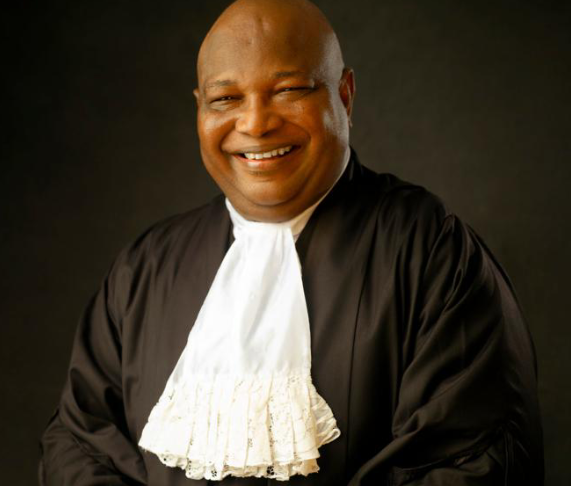

By Dr. Wahab Shittu, SAN
A good policy still needs a lawful instrument
There is much to admire in the decision announced at the State House on Wednesday. President Bola Ahmed Tinubu has directed that all cleared and unencumbered funds recovered by the Economic and Financial Crimes Commission be channelled to the Nigerian Education Loan Fund. He has also directed that monies sitting in the Unclaimed Dividends Trust Fund and the Dormant Accounts Trust Fund be mobilised for the same purpose, subject to the laws that established them. The Minister of Education, Dr Tunji Alausa, who made the announcement after the fourth Federal Executive Council meeting of the year, said the Attorney-General, the Minister of Finance, his own ministry and the Debt Management Office would work out the legal and operational framework.
Let me say at once that I have no quarrel with the policy. Money taken from Nigerians, returned to Nigerians and spent on the education of their children is about the best use recovered assets can be put to. The Minister was careful, too, in ways that deserve notice. He limited the directive to liquid funds already recovered and out of litigation. He excluded seized properties and any asset still before a court. And he made the two trust funds conditional on their own establishing legislation. Those qualifications are the whole difference between a lawful policy and an unlawful one.
But a directive is not a legal instrument. It states an intention. Only law moves money, and the framework the Minister promised is where the law will have to be done. It is worth setting out now what that framework must contain, before the first transfer rather than after the first writ.
Start with the simplest question, and the one most easily skipped. Whose money is this? Recovered funds sounds like one thing. It is at least four. Money diverted from the Federation Account has a strong claim to go back there and to be shared under section 162 of the Constitution, which means the states and local governments have an interest they can litigate in the original jurisdiction of the Supreme Court. Money taken from federal funds outside that account is a federal receipt and can be appropriated in the ordinary way. Money stolen from a state belongs to the state, and no federal appropriation can reach it. And a great deal of what the Commission recovers is the proceeds of fraud on private persons, often foreigners, which is not public money at all. It falls to the Treasury only because nobody has come forward to claim it, and the claimant who surfaces late is not necessarily defeated by the fact that the Treasury has taken possession. Article 57 of the United Nations Convention against Corruption, which binds Nigeria, gives priority to prior legitimate owners and to the victims of the crime. Education is where such money goes when it has nowhere better to go. That is a residual claim, not a first claim.
Suppose all of that settled and the money properly in the Consolidated Revenue Fund. Section 80(2) of the Constitution then allows no withdrawal except for expenditure charged on the Fund by the Constitution itself, or authorised by an Appropriation Act or a Supplementary Appropriation Act. Section 80(3) says much the same of every other public fund of the Federation, requiring an Act of the National Assembly. A presidential directive is an instruction to officials. It is not an Act, and it cannot authorise anyone to move a naira out of a public fund.
That is not an objection. It is a signpost, and the road it points to is open. Section 80(1) excludes from the Consolidated Revenue Fund any money that an Act of the National Assembly directs into another public fund established for a specific purpose. Amend the Student Loans (Access to Higher Education) Act 2024 to make finally forfeited assets a source of the Fund, and the money never touches the Consolidated Revenue Fund at all. What cannot be done by instruction can be done cleanly, and permanently, by statute.
The second limb of the directive is harder, and it is a different problem altogether. Unclaimed dividends and dormant balances are not government revenue. A shareholder who has not collected a dividend has not given it away; he has simply not collected it. A depositor whose account has gone quiet for six years has not lost his deposit. Under the arrangement introduced by the Finance Act 2020, sums of this kind transferred to the Federal Government remain a special debt owed to the shareholders and account holders, claimable with the yield at any time. The state holds that money as a debtor. Section 44(1) of the Constitution protects it, and the forfeiture exception in section 44(2)(b) is no help, because the shareholder and the depositor have broken no law. There is the whole distinction between the two limbs of this directive. Proceeds of crime are forfeited because somebody broke the law. A dividend is not.
None of which makes the money untouchable. It means only that it must be used as what it is, a liability rather than a windfall. Structure it as a borrowing authorised by statute and guaranteed by the Federal Government, record the liability in the public debt, keep a buffer against claims, and preserve every owner’s right to be paid in full on demand. Section 41(1)(a) of the Fiscal Responsibility Act 2007 permits borrowing only for capital expenditure and human development, and the financing of tertiary education sits comfortably within that. That the Debt Management Office was named among the agencies drafting the framework suggests somebody has already seen this. The Office has no business moving forfeited assets. It has every business structuring a loan.
The phrase cleared and unencumbered will also have to mean something in practice. A final forfeiture order is not always final. Time to appeal can be enlarged. Orders made ex parte are set aside. Third parties who never saw the newspaper publication keep surfacing, sometimes years later. Funds repatriated through mutual legal assistance almost always arrive with conditions imposed by the returning country, and those conditions bind us in international law whatever a domestic directive may say. So the framework should express the phrase as a checklist of conditions rather than a conclusion, require a written certificate from the Attorney-General for every sum released, and hold back a fixed percentage of each transfer as a reserve. A programme that cannot give back money it should never have spent will be embarrassed sooner or later.
Two further cautions. We have done this before, and done it well. The 322.5 million dollars returned from Switzerland in 2017 went to social investment, and the 311.8 million dollars returned from the United States and Jersey in 2020 went to three named projects, the Lagos to Ibadan expressway, the Abuja to Kano road and the Second Niger Bridge. Each rested on a written agreement with a defined purpose, a ring-fenced account and independent monitoring. That is the template by which foreign jurisdictions now measure us when they decide whether to send more. We should not abandon it.
The second caution is fiscal. Recoveries are lumpy and unpredictable, while the loan scheme carries a recurrent and growing bill: more than 1.2 million students, over N93 billion already disbursed in upkeep and more than N250 billion in institutional fees. Build an endowment out of recoveries and spend the income. Consuming them in the year they arrive guarantees a hole in the year they do not.
One last thing, and it is the most encouraging. At the same meeting, Council approved the transformation of Suleja Academy into an autonomous Nigerian Academy for the Gifted and Talented, and directed the Attorney-General to prepare an executive bill so that the National Assembly could give the change legal effect. That was exactly right. If altering the legal status of a school requires an Act of the National Assembly, altering the destination of a public fund can hardly require less. Do it that way and Nigeria will have a model worth exporting. Do it any other way and it will end where recovered assets in this country so often end, in court, with a generation of students waiting.
Dr. Wahab Shittu, SAN, teaches at the Faculty of Law, University of Lagos.
Dear readers, we really need your support to keep on serving you with authoritative, truthful, and juicy stories everyday. For your support, please reach out to the editor @gavelinternational66@gmail.com