
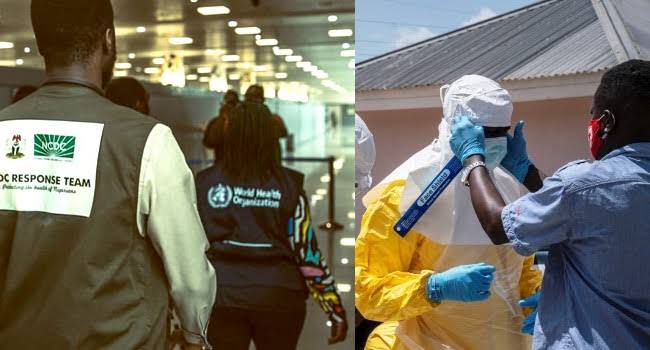
The Nigeria Centre for Disease Control and Prevention (NCDC) has identified two suspected cases of Ebola virus disease in Nigeria’s North-East region, with both individuals placed in isolation pending laboratory test results.
The agency disclosed this in an update published on its official X handle on Saturday, noting that contact identification and listing were ongoing as part of efforts to contain any potential spread of the disease.
According to the NCDC, laboratory tests were being conducted to establish whether the individuals had contracted the virus.
“Two suspected cases of Ebola disease have been identified in Nigeria’s North-East region. Both individuals have been isolated, contact identification and listing is ongoing, and laboratory testing is being conducted,” the agency stated.
It, however, emphasised that the classification of the individuals as suspected cases did not mean they had tested positive for Ebola, adding that confirmation would depend on laboratory results.
The NCDC urged Nigerians to maintain proper hand hygiene, observe enhanced sanitation practices and follow public health advisories to reduce the risk of infection.
The development comes days after the Federal Government confirmed Nigeria’s first imported case of Ebola virus disease in the Federal Capital Territory (FCT), Abuja, on 20 October 2026.
The Minister of Health and Social Welfare, Prof. Ali Pate, said the infected woman had travelled to Nigeria from Uganda and developed symptoms on 7 October before seeking medical attention at a private hospital in Abuja on 11 October.
Following the confirmation, health authorities initially identified 44 contacts, including healthcare workers, patients, caregivers and individuals who might have travelled with the patient. The figure subsequently increased to 53, with all identified contacts placed under surveillance.
The patient was later evacuated to Switzerland on 26 October alongside her husband, who had remained asymptomatic.
Pate said the woman was clinically stable at the time of the evacuation but cautioned that she could still transmit the virus.
The World Health Organisation (WHO) has said Nigeria must complete a 42-day monitoring period before it can be declared free of Ebola. The period comprises 21 days of monitoring identified contacts, followed by another 21 days in accordance with established protocols.
Meanwhile, the Federal Government announced a weekly payment of N100,000 to each contact of the confirmed case as an incentive to encourage compliance with quarantine directives and prevent possible community transmission.
Dear readers, we really need your support to keep on serving you with authoritative, truthful, and juicy stories everyday. For your support, please reach out to the editor @gavelinternational66@gmail.com