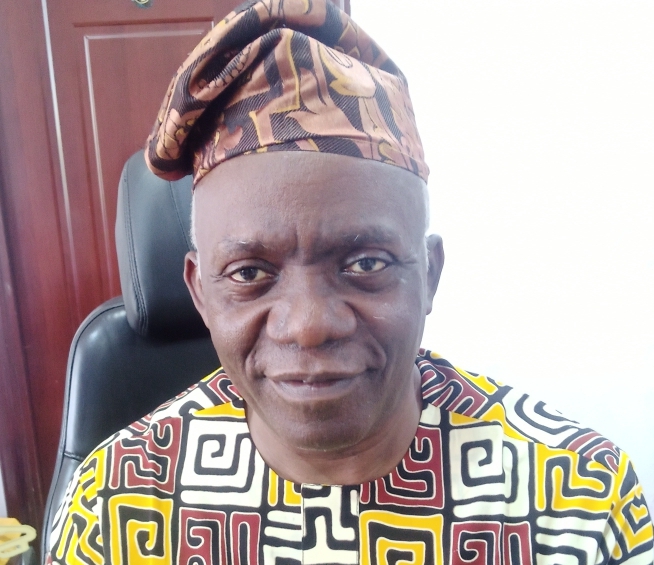

Human rights lawyer, Femi Falana, SAN, has called on the media to challenge political parties and their candidates to make concrete commitments towards ending child illiteracy and addressing the growing number of out-of-school children in Nigeria.
Falana said all registered political parties should be compelled to disclose their programmes for ensuring that every Nigerian child enjoys the right to free, compulsory and universal basic education as guaranteed by the Constitution and relevant national and international laws.
He noted that Section 18 of the 1979 and 1999 Constitutions provides that government shall, as and when practicable, direct its policies towards ensuring equal and adequate educational opportunities at all levels, including primary, secondary, university and adult education.
According to him, the Federal Government and the 36 state governments have, following sustained public pressure and international advocacy, enacted laws making basic education free and compulsory for every Nigerian child.
Citing the Compulsory, Free Universal Basic Education Act, Falana said Section 2(1) obliges every government in the country to provide free, compulsory and universal basic education for all children of primary and junior secondary school age.
He also referred to Section 15 of the Child’s Rights Act, which guarantees every child the right to free, compulsory and universal basic education and places a corresponding obligation on government to provide it. He explained that the Act applies to the Federal Capital Territory, while states have domesticated its provisions through their respective Child’s Rights Laws.
Falana further noted that Nigeria ratified the United Nations Convention on the Rights of the Child in 1991 and subsequently enacted the Child’s Rights Act in 2003, with states adopting corresponding legislation.
On the funding of basic education, he said the Universal Basic Education programme is financed through a federal block grant of at least two per cent of the Consolidated Revenue Fund, alongside counterpart contributions from state governments.
He maintained that tuition and other prescribed basic educational services in public primary and junior secondary schools are free under the relevant legislation, warning that the imposition of illegal charges undermines the statutory right of children to education.
Falana also stressed that parents and guardians have a legal responsibility to ensure that their children attend and complete primary and junior secondary education, adding that the law prescribes sanctions for those who fail to discharge this responsibility.
He expressed concern over the suspension of the National Home-Grown School Feeding Programme, which was established to provide free meals to pupils in public primary schools under the Federal Government’s social investment initiatives.
The senior advocate also recalled that the National Commission for Almajiri and Out-of-School Children Education Act, enacted in May 2023, established a commission mandated to address illiteracy and educational exclusion among Almajiri and other out-of-school children.
He lamented that, despite these legislative provisions, governments at both federal and state levels had failed to address the country’s child illiteracy crisis effectively.
Falana further accused governments of disregarding judicial decisions affirming the right of Nigerian children to education. He cited three cases in which the courts upheld the obligation of government to protect and guarantee that right.
They include SERAP v. Federal Republic of Nigeria (ECW/CCJ/JUD/07/10); The Legal Defence and Assistance Project (LEDAP) v. Federal Ministry of Education & Anor (Suit No. FHC/ABJ/CS/978/15); and Femi Falana & Anor v. Attorney-General of the Federation & 36 Ors (Suit No. FHC/L/CS/142/24).
He lamented that the failure to implement the laws and enforce court judgments had left millions of children, particularly those from poor and disadvantaged backgrounds, without access to basic education.
According to him, the neglect of children’s education poses a serious threat to social stability and national development, particularly as an estimated 20 million Nigerian children remain out of school.
The human rights lawyer also expressed concern over revelations by the Universal Basic Education Commission (UBEC) that, as of August 2026, about ₦267 billion in released intervention funds remained unutilised, while state governments and the Federal Capital Territory had yet to access more than ₦65 billion in counterpart funding.
Describing the situation as unacceptable in a country with enormous human and natural resources, Falana said the failure to utilise funds earmarked for basic education reflected a lack of political commitment to tackling the crisis.
He therefore urged the mass media, particularly in view of the ongoing political campaigns, to demand that all registered political parties and their candidates publish clear and measurable programmes for implementing the constitutional right to education.
He specifically called for urgent measures to remove children of school age from the streets across the 36 states and the Federal Capital Territory and ensure their enrolment in schools.
Falana said no Nigerian child should be denied access to basic education because of poverty, government negligence or the failure of public institutions to discharge their statutory responsibilities.
He also invoked Article 17 of the African Charter on Human and Peoples’ Rights (Ratification and Enforcement) Act, which recognises the right to education, insisting that governments must translate the legal guarantees into practical benefits for every Nigerian child.
Dear readers, we really need your support to keep on serving you with authoritative, truthful, and juicy stories everyday. For your support, please reach out to the editor @gavelinternational66@gmail.com