

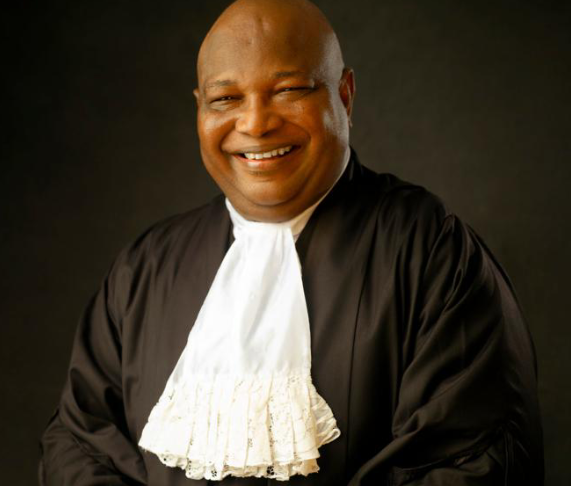

By Dr. Wahab Shittu, SAN
There is a sentence I have carried with me through a professional lifetime spent at the meeting point of public power and the law, and I offer it here as the text of this chapter: the public officer’s authority is borrowed, not owned, and every borrowed thing, however long the loan, is eventually called in, usually at the moment least convenient to the one holding it.
I did not learn that sentence from a book. I learned it in courtrooms and panel rooms, in the offices of the mighty and in the corridors outside them, watching men at the very height of their powers discover, always with astonishment, that the powers were never theirs. The discovery is always the same, and the astonishment is always the same, because each generation of officeholders persuades itself that it is the exception, that the loan made to it alone has quietly ripened into a gift. It never has.
This chapter is an attempt to unpack that sentence clause by clause: to show that authority is in truth borrowed; that the loan comes with terms; that it is always, without exception, called in; and that the timing of the call belongs to the lender and never to the borrower. It ends with the only question that matters, which is how a wise man holds a thing he knows he must return.
The nature of the loan
Begin with the loan instrument itself, for it is written down and every officeholder has signed it. Section 14(2)(a) of the Constitution of the Federal Republic of Nigeria declares that sovereignty belongs to the people of Nigeria, from whom government, through the Constitution, derives all its powers and authority. The words repay slow reading. All its powers. Not some of them, not the residue after the great offices have taken their fill, but every last grain of public authority exercised anywhere in this Republic, from the presidential assent that makes a bill law to the constable’s hand on a shoulder at a checkpoint. None of it originates in the officer who wields it. All of it is derived, which is the constitutional draftsman’s word for borrowed, and the lender is named in the deed: the people of Nigeria.
The Constitution, then, is the loan agreement, and the oath of office is the borrower’s signature. No one comes into public authority in Nigeria without swearing that oath, and the oath is not a ceremony of acquisition but a ceremony of obligation: the incoming officer promises to preserve, protect and defend an instrument written by others, for others, before he arrived and after he will leave.
The lawyers among my readers will recognise the deeper structure at once, because it is the oldest structure in our discipline. Public office is a trust, and the officeholder is a trustee. A trustee may manage the trust property, deploy it, even flourish by his skill in its management; the one thing he may never do is treat it as his own. The moment he does, equity has a name for him, and it is not a flattering one. What is true of the trustee of a family settlement is true, on the grandest scale, of the trustee of a nation’s power.
And the borrowing runs all the way down. The executive powers of the Federation are vested in the President, who exercises them subject to the Constitution and the laws; the minister exercises what the President delegates; the permanent secretary what the minister assigns; the director what the permanent secretary permits; and so on to the last messenger carrying the last file. Every one of them is a borrower from a borrower, and at the head of the chain stands not the biggest borrower but the lender, the people, who alone own what everyone else merely holds. Even the judge, before whom all these borrowers may one day answer, sits by virtue of judicial powers vested by the Constitution in courts, not in persons; he too will rise from that bench on an appointed day and hand the borrowed jurisdiction, undiminished, to another. In the whole architecture of the Nigerian state there is not a single office whose occupant can produce a title deed. There are only receipts.
The terms of the loan
No loan worth the name is made without terms, and the terms of this one are four. The first is purpose. The Constitution does not lend power for the borrower’s enjoyment; it declares, in section 14(2)(b), that the security and welfare of the people shall be the primary purpose of government. Power is borrowed for the lender’s benefit, and the officer who diverts it to private ends has not merely behaved badly; he has committed, in the public sphere, the precise wrong that the private law of property calls conversion, the using of another’s thing as one’s own. Our statutes give it other names, abuse of office, corruption, criminal breach of trust, but the anatomy of the wrong is identical, and so, eventually, is the remedy: the thing converted is traced, recovered and restored to its owner.
The second term is limit. Borrowed authority comes in a measured quantity, and the measure is the law. There is no public officer in Nigeria, however exalted, who holds a power the courts cannot measure against the instrument that conferred it, and the act that exceeds the measure is ultra vires, which is simply Latin for spending beyond the loan. The apex court reminded an over-zealous security agency of this many years ago, when it seized a citizen’s passport in the name of national security and was told that a restriction on rights, whatever its motive, is unlawful unless the law itself authorises it. The lesson has had to be retaught in every decade since, because every decade produces officers who mistake the importance of their purpose for the width of their power.
The third term is duration, and here the Constitution is almost unkind in its candour. No oath of office in Nigeria is administered without a calendar attached. The elected officer holds for a term of years and must return to the lender, at an election, for any renewal; the appointed officer holds at pleasure or until a retiring age that was fixed before he was born; the judicial officer, for all the majesty of his tenure, watches the same clock. Tenure is the duration of the loan, not its discharge. Even the celebrated immunity of section 308, behind which governors and presidents shelter while in office, is on its own terms temporary: it suspends proceedings, it does not extinguish them. More than one former governor of this Republic has discovered, in the dock, that section 308 is a moratorium, not a forgiveness. The debt was accruing all along; only the demand was postponed.
The fourth term is account. The borrower must show what he did with the loan. That is the office of the Code of Conduct and its declarations of assets; of the Auditor-General and the public accounts committees; of legislative oversight and ministerial questions; of the anti-corruption commissions whose files never close; and, at the end of every chain of accounting, of the courts.
It is also the premise of a development in our law to which I have devoted a three-volume study and return to elsewhere in these pages: the principle that wealth grossly disproportionate to every known lawful income of its holder may be called upon to explain itself, and that where no explanation comes, the law may draw the inference and recover the assets, conviction or no conviction.
Since 2022 that principle has stood on a comprehensive statutory footing in the Proceeds of Crime (Recovery and Management) Act. The officer who supposes that the absence of a criminal conviction closes his account has not read the terms of his loan.
The calling in of the loan
Every loan is called in. I state it as a law of our public life, because in all my years at the bar I have never seen the exception. The call comes in many costumes: an election lost; a retirement quietly gazetted; a suspension announced on the evening news; a summons to a panel of inquiry; a subpoena; an interim forfeiture notice published in a newspaper, inviting all who claim certain assets to come to court and show cause; or nothing more dramatic than a successor’s polite letter asking for a handover note that must now be written and must now be true.
However the way it comes, its content is always the same. The lender, through one instrument or another, is asking the borrower the only question lenders ever ask: what did you do with what you were given?
And it comes, with an almost malicious punctuality, at the moment least convenient to the one holding it. The call rarely arrives while the borrower is strong. It waits until the office has passed, until the security detail has been reassigned and the convoy dispersed, until the telephone that never stopped ringing has gone silent and the aides who once arranged everything now remember nothing. It waits until the files are in other hands. I have sat with men in that season of their lives, and I can report that the discovery they find hardest is not that the power is gone; it is that the power was never the thing protecting them. What protects a man when the loan is called is not the office he held but the state of his accounts.
I have watched the procession at close quarters, and elsewhere in these pages I have recorded its most instructive recent turn: the nation’s chief corruption hunter arrested, detained and made to answer before a presidential panel upon a memorandum from the Attorney-General of the day; and, six years later, the machinery of asset recovery applied, in open court, to properties associated with that same former Attorney-General.
The prosecutor of one season became the respondent of another. I decline, there as here, to gloat over the irony, because the lesson of the procession is not the cheap one that the mighty fall. It is that the machinery of accountability outlives every officer who operates it, and must; and that those who wield extraordinary powers should wield them with the humility of men who may one day stand at the receiving end.
Honesty compels one concession, and I make it with emphasis. Not every call is righteous. Some demands are made maliciously, by successors settling scores in the costume of accountability; some are made by ambush, through panels that sit in secret and report to nobody, punishing a man’s name without ever judging his cause. I have stood as counsel against precisely such a call, and I insisted then, as I insist now, on the elementary things: that an accuser must prove, that a man must know and confront the case against him, and that suspension is not conviction.
But observe what follows from the concession. It is not that the loan should never be called; it is that the calling must itself be lawful, public and fair, for the integrity of the process is the only lasting protection any borrower has, and it protects him only if it is kept scrupulously fair for everyone, ally and adversary alike. An accountability that bends with the political wind is not law but weather, and a borrower who cheered the ambush of his rivals has already written the rules for his own.
Living as a borrower
What, then, is the wise way to hold a thing one knows one must return? The answer begins in temperament and ends in paperwork. In temperament, because the officer who genuinely believes that his authority is on loan carries himself differently: he consults where the owner of power would command, persuades where the owner would decree, and declines to inhale the incense of office, the sirens, the protocol, the genuflections, knowing them to be fittings of the position and not tributes to the man. Power is a corrosive substance, and the only glove that has ever handled it safely is the consciousness of stewardship.
And in paperwork, because the prudent borrower keeps receipts. He documents his decisions and the reasons for them; he follows the procurement rules even when they are tedious, precisely because they are tedious for everyone; he makes his asset declarations promptly and truthfully, so that his wealth will never one day be invited to explain itself in a courtroom where he has no good answer; he lives within a lawful income while in office, which is the one austerity that pays compound interest; and he prepares his handover note from his first week, not his last, because a man who is always ready to render account has, in the deepest sense, already rendered it. The only public officer who fears no audit is the one who has been conducting his own, daily, all along.
Above all, the wise borrower refuses to personalise the institution lent to him. He does not pack it with retainers loyal to himself rather than to its purpose; he does not bend its powers to reward his friends and hunt his enemies; he does not confuse criticism of his tenure with subversion of the state. For institutions personalised in one season will be turned, in the next, upon the very hands that personalised them, and the officer who taught an agency to serve a man instead of a mandate should not be astonished when it serves the next man with equal devotion, against him.
The reckoning, and the freedom in it
Let me end where this chapter began, with the sentence. The public officer’s authority is borrowed, not owned, and every borrowed thing, however long the loan, is eventually called in, usually at the moment least convenient to the one holding it. I hope it is now clear that the sentence is not a threat but a description of design. The calling in of the loan is not the tragedy of public life; it is the very feature that distinguishes a republic from an estate. In an estate, power is property, passed by inheritance and answerable to no one. In a republic, power is credit, extended for a season, on terms, to be accounted for; and the perpetual auditing of that credit, at elections, in legislatures, before commissions and in open court, is not the system failing the officeholder but the system keeping faith with the lender.
There is, for the borrower who understands this, an unexpected freedom in it. The officer who knows the loan will be called has nothing to dread in the calling; he has been ready every day. He can hold the greatest offices lightly, spend their powers generously on the purposes for which they were lent, and hand them back, on the appointed day, undiminished and unashamed.
Office will be taken from every one of us who holds it; on that the Constitution, the calendar and mortality are unanimous. The only question any of us can answer in advance is what the lender will find when the loan is called: an account kept faithfully, or a debt that has been quietly compounding in the dark. Everything I have seen in a lifetime at the bar persuades me that this is the true measure of a public career, and that the men our history ultimately honours are not those who held power longest, but those who returned it best.
Dear readers, we really need your support to keep on serving you with authoritative, truthful, and juicy stories everyday. For your support, please reach out to the editor @gavelinternational66@gmail.com