


Urges stronger collaboration among anti-graft agencies, judiciary
President Bola Tinubu has commended the Economic and Financial Crimes Commission (EFCC) for securing 10,872 convictions and recovering N1.233 trillion in the first 34 months of his administration, calling for stronger collaboration among stakeholders in the fight against corruption.
Tinubu, represented by Vice-President Kashim Shettima, spoke on Tuesday, October 13, 2026, at the opening of the eighth EFCC/National Judicial Institute (NJI) Workshop for Judges and Justices in Abuja.
The three-day workshop, themed “Investigation and Prosecution of Economic and Financial Crimes in a Digital Age,” will end on Thursday, October 15.
The President said the EFCC filed 14,476 cases in court and secured 10,872 convictions during the period, representing a 75.1 per cent conviction-to-filing ratio. In the first half of 2026, the commission recorded 1,370 convictions from 1,889 cases filed.
It also recovered $684.48m, £373,905.78 and €9.34m, in addition to the N1.233tn recovered in local currency.
Tinubu praised the commission’s efforts in tackling cryptocurrency fraud and recovering virtual assets, citing the prosecution and subsequent deportation of 192 foreigners arrested for cyberterrorism and cryptocurrency fraud as evidence of its resolve to combat technology-driven crimes.
He said the growing sophistication of financial crimes, fuelled by blockchain technology and artificial intelligence, required continuous training for investigators, prosecutors and judicial officers.
While pledging the Federal Government’s support for judicial capacity development, Tinubu urged the courts to strengthen their ability to handle complex financial crime cases without compromising judicial independence.
He warned that major anti-corruption prosecutions lost on procedural technicalities could erode public confidence, urging the EFCC and the judiciary to improve prosecutorial discipline and close loopholes exploited to frustrate trials.
The President also credited asset recovery efforts with providing support for social intervention programmes, including the Nigerian Education Loan Fund and the Nigerian Consumer Credit Corporation.
EFCC Chairman, Ola Olukoyede, said the commission had strengthened intelligence-led investigations, forensic capabilities and domestic and international cooperation to improve recoveries and convictions.
He lamented that procedural delays, frivolous adjournments and frequent changes of counsel often stalled financial crime trials, weakening evidence and undermining public confidence.
Olukoyede urged judges to ensure rigorous and expeditious adjudication, stressing that the commission sought neither convictions at all costs nor shortcuts around due process, but properly investigated cases supported by credible evidence.
Chief Justice of Nigeria, Justice Kudirat Kekere-Ekun, said judges must develop a deeper understanding of cryptocurrency transactions, encrypted communications, electronic records and cross-border financial activities.
She emphasised that the seriousness of an allegation must not determine the outcome of a trial, insisting that the prosecution must establish its case with credible, legally admissible evidence.
The CJN called for effective case management under the Administration of Criminal Justice Act, 2015, while cautioning that cooperation among institutions must never extend to influencing judicial decisions.
Chairman of the Senate Committee on Anti-Corruption, Senator Emmanuel Udende, identified prolonged trials as a major obstacle to effective prosecution, urging judges to minimise avoidable adjournments without sacrificing fair hearing.
Similarly, Chairman of the House Committee on Financial Crimes, Ginger Onwusibe, called for increased funding for forensic laboratories, digital investigation tools and specialised training, alongside legislative reforms to strengthen the handling of digital evidence and virtual assets.
Attorney-General of the Federation and Minister of Justice, Lateef Fagbemi, said successful prosecution depended on thorough investigations and the lawful collection, preservation and authentication of digital evidence.
He urged investigators, prosecutors, defence counsel and judges to uphold professionalism and due process, adding that effective asset recovery required credible evidence, sound judicial procedures and respect for the rights of affected persons.
Fagbemi called for stronger cooperation among the Ministry of Justice, EFCC, judiciary and financial intelligence institutions to tackle increasingly sophisticated and transnational financial crimes.
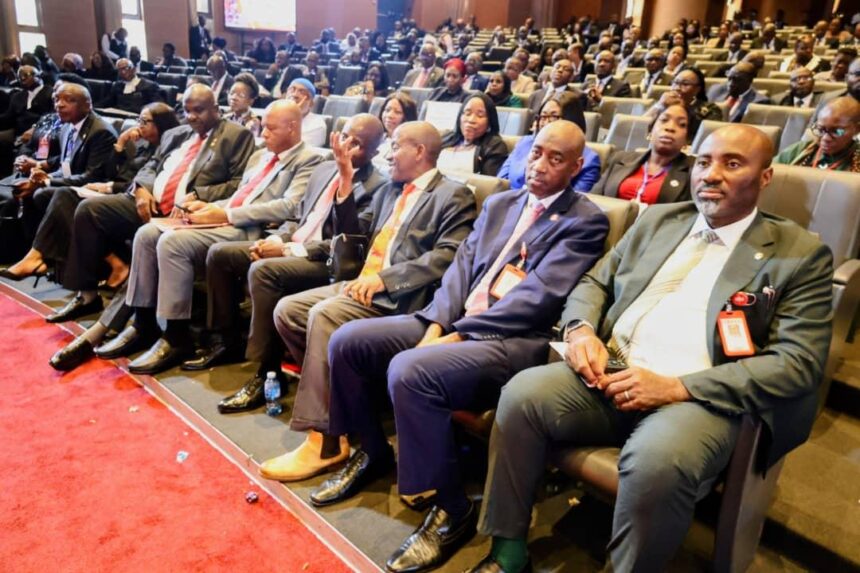
The workshop brought together judicial officers, legal practitioners, anti-corruption experts and other stakeholders to examine ways of strengthening Nigeria’s response to economic and financial crimes in the digital age.
Clarify the recovery figures
Tighten the duplicated collaboration points
Strengthen the Nigerian news lead
Dear readers, we really need your support to keep on serving you with authoritative, truthful, and juicy stories everyday. For your support, please reach out to the editor @gavelinternational66@gmail.com