The Federal Government has secured a $200 million commitment from the World Bank Group to expand fisheries and aquaculture production in Nigeria, in a move aimed at addressing the country’s growing fish supply deficit.
The funding, which will be made available to state governments as concessional loans, is expected to stimulate investment, increase domestic fish production and reduce Nigeria’s dependence on fish imports.
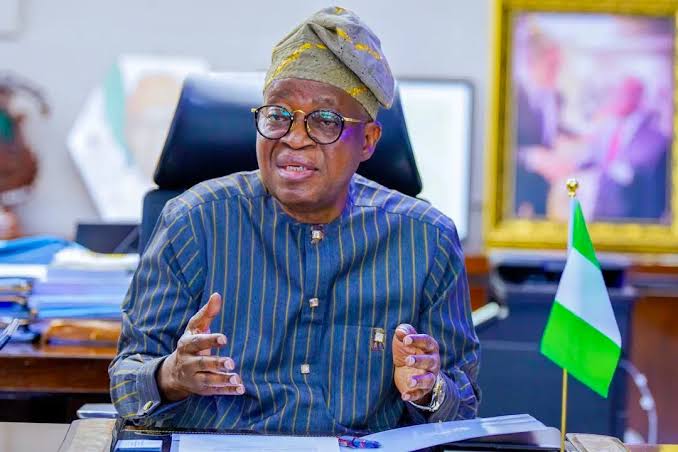
The Minister of Marine and Blue Economy, Adegboyega Oyetola, disclosed this during an executive training on the Aquaculture Investment Guide organised by the ministry in collaboration with the World Bank Group in Abuja.
According to a statement issued on Sunday by the minister’s Special Adviser, Bolaji Akinola, the training brought together key policymakers and technical officials, including commissioners from Rivers, Bayelsa, Delta and Cross River states, as well as permanent secretaries and directors of fisheries and aquaculture from across the country.
Oyetola, who was represented by the Senior Special Assistant to the President on Marine and Blue Economy, Busayo Fakinlede, said state governments must take greater responsibility for increasing domestic fish production.
“Our ambition is to produce more, import less and, in time, become a net exporter. That ambition can be achieved only when every state plays its part,” he said.
The statement noted that Nigeria requires approximately 3.6 million tonnes of fish annually but currently produces about 1.4 million tonnes, leaving a supply deficit of more than 2.2 million tonnes.
To address the shortfall, Oyetola said the ministry was pursuing a state-driven aquaculture development framework under which state governments would identify priority value chains, assess investment readiness, develop bankable projects and commit to measurable contributions to national fish production.
He explained that the $200 million World Bank commitment would provide financing for states to implement these priorities, expand production capacity and move the country towards self-sufficiency in fish production.
The minister said the collaboration between the Federal Government and state governments would also establish a coordinated platform for implementing a national fish security strategy.
“A federal-state interface is also expected to provide a coordinated platform for an inclusive national fish security strategy, ensuring that the Federal Government’s ambition is translated into measurable production commitments and investment outcomes at the sub-national level,” he was quoted as saying.
Oyetola commended the World Bank for its support for Nigeria’s marine and blue economy development through analytical studies, cluster-based development initiatives, capacity-building programmes and the Aquaculture Investment Guide.
He also disclosed that he would oversee a post-training stakeholders’ roundtable to strengthen engagement with state governments and other relevant stakeholders.
According to him, the meeting would focus on improving implementation arrangements, deepening collaboration and sustaining the momentum generated by the initiative.
Dear readers, we really need your support to keep on serving you with authoritative, truthful, and juicy stories everyday. For your support, please reach out to the editor @gavelinternational66@gmail.com