

By Dr. Abejide B. Olusegun
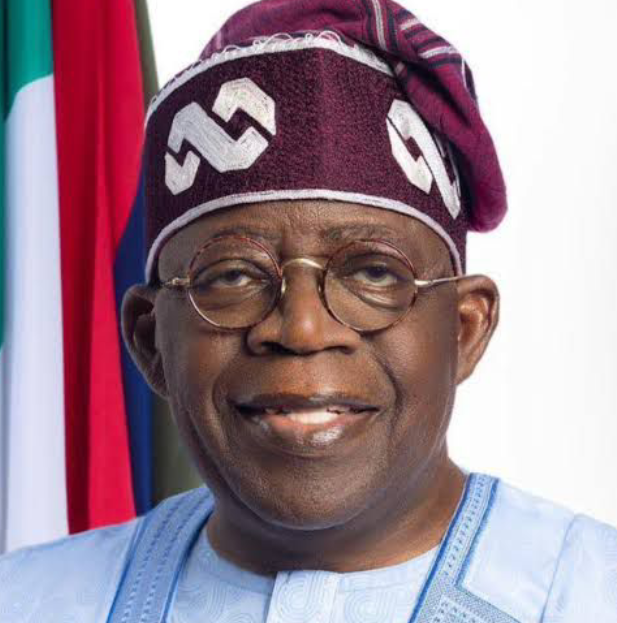
President Bola Ahmed Tinubu, you have completed 30 months of leading a country riddled with 60 years of institutional deformities. The government has been unassumingly revolutionary in recalibrating the levers of the economy, but its high-stakes decisions have not been visible to the average Nigerian. It’s time to break the silence.
*The Foundation of Reform: What Has Been Done Right*
President Tinubu had to take over a country where intractable systemic issues had long been left unchecked, even by the very authorities that should have addressed these issues, who were either completely overwhelmed by them or lacked the political will to confront them. As a result, President Tinubu has had to be, in many instances, daring in the manner he has handled even the most sensitive of matters that have become sacred cows in the Nigerian project, which no previous president had the political will, courage, or fortitude to challenge. Just like the shock that the subsidy removal portended on his first day in office was a necessary operation to stop the hemorrhaging of our national resources, the decision to unify the foreign exchange market also dealt a death blow to several decades of arbitrage that had for years enriched the few and impoverished the many.
Data and records show that these recent interventions are beginning to yield positive dividends for Nigeria as a whole. Government revenues have more than doubled to exceed 9.1 trillion Naira as of the first half of 2024, compared to the first half of 2023. The percentage of revenue going to debt servicing has dropped from a previous high of 97 percent to 68 percent of revenue. As such, Nigeria was able to clear 5 billion dollars in arrears of foreign exchange obligations without the need to draw down on the servicing of its foreign and domestic debts and without halting its existing programs. To add to these achievements, the President showed the kind of political will and fortitude that previous governments could not muster by stopping Ways and Means financing, which was fast becoming the Achilles’ heel of previous Nigerian governments, as well as a major catalyst of the steady drumbeat of inflation. Furthermore, NNPC, which was once a bleeding entity due to the high amount of unsustainable fuel subsidies it was being charged with, is now a net contributor to the Federation Account. These are not just cosmetic changes but rather fundamental structural reforms and adjustments that set Nigeria on a trajectory for sustainable growth.
*The Technology and Infrastructure Push*
In addition to economic reforms, there have been other, less visible but vital investments made by the Tinubu administration in infrastructure necessary for the technology age. The new Compressed Natural Gas scheme will save Nigeria over 2 trillion Naira per month on petroleum imports while also providing cleaner fuel for vehicles. Oil output has risen to 1.61 million barrels per day, a reversal of years of stagnation in the sector. Signature infrastructure projects such as the Lagos-Calabar Coastal Highway, the Sokoto-Badagry Highway, and the Cotonou, Benin City, Onitsha to Enugu Expressway are long-term infrastructure projects aimed at helping to connect Nigerian markets and lower logistics costs. The 10 MSME hubs providing 240,000 jobs for Nigerians show an appreciation that economic growth must be shared. The Nigerian Consumer Credit Corporation is being funded with over 200 billion Naira to take a revolutionary approach to expanding access to goods and services for all Nigerians.
*The Focus Must Shift: From Reform to Results*
But having laid the groundwork, Tinubu must now aggressively follow through with policies that provide short-term relief to ordinary Nigerians. While we welcome the reduction in inflation from 34.6 percent to 23.71 percent by May 2025, more aggressive measures are needed to bring it down faster. Special attention is needed to reduce food prices that hurt the poorest the most. So far, measures like the distribution of mechanized farming equipment and fertilizer announced by the government are only a start.
We advise the president to take three actions. First, Nigerians must quickly start seeing the dividends of the government’s higher revenues in the form of better public services, especially in health and education. They must see that the temporary pain of the adjustment period is not for nothing, but is leading to improvements in their lives. Second, job creation efforts, like the 240,000 jobs that will be created from MSME hubs, should be massively scaled up. Nigeria’s unemployment crisis demands measures that can create millions of jobs, especially for young Nigerians. Third, the gains from the CNG project in terms of cheaper transportation must be made available to ordinary Nigerians as soon as possible through a conversion subsidy program and the building of more supporting infrastructure.
*The Constitutional Imperative: A Nation’s Moment of Truth*
President Tinubu cannot afford to turn a blind eye to this elephant in the constitution. The ongoing constitutional review exercise is a window of opportunity to address some of the fundamental issues with Nigeria’s current governing arrangement. Critics have been correct in pointing out that the 1999 Constitution was foisted on Nigerians by a military administration that did not have the popular mandate to do so. It was also born with structural defects, some of which have inhibited the country’s development over the last 24 years.
The recent statement by former President Obasanjo to the effect that Nigeria requires good leaders and not a good constitution betrays a misunderstanding of the interaction between institutions and leadership. His submission is not just incorrect; it is positively injurious. It is institutions that provide the enabling environment for good leadership to prosper and for bad leadership to be reined in. We have had mediocre American presidents over the years because the US Constitution provides effective checks and balances. Nigeria’s overly centralized structure, in contrast, makes the country excessively dependent on the quality of occupants of Aso Rock at any given time.
The former president also fails to understand that constitutions shape behavior and incentives. Our current constitution centralizes too much power at the federal level and robs states and local governments of the powers and resources required to effectively carry out their functions. It breeds a winner-takes-all syndrome that makes every election a do-or-die affair. It gives the president insufficient checks and limited protection for minority rights. These are not issues that good leadership can remedy; they can only be fixed through structural adjustment.
*The Path Forward: Constitutional Surgery for National Healing*
President Tinubu must ensure that this is not another in the long line of opportunities for giving Nigeria a people’s constitution that has eluded us all these years. This current constitution review process must be approached with the intent of completely overhauling and restructuring the current ‘fiscal federalism’ structure of government that we have. Fiscal federalism, resource control, true local government autonomy, judiciary independence, and electoral reform are some of the areas that should be addressed within this constitution review in order for this government to leave a lasting mark on this nation. The setting up of the South East Development Commission by the president in his first week in office shows that there is a clear understanding of the need for this kind of inclusiveness in national development, but it is restructuring the constitution to give each region and zone the legal space to take its fair share of the national cake that will guarantee this position for all parts of Nigeria.
But most importantly, President Tinubu must use his constitutional powers and influence to lead the way in the agitation for a return to regional governance, which once made Nigeria a shining example in Africa and could well have made us the first developed country in Africa today. The regional system of government in the First Republic, for all its foibles, unleashed a positive and healthy competition in the Western, Eastern, and Northern regions, which collectively made Nigeria progress like never before. Each region wanted to be better than the other, and this extended to every area of national life, including education, infrastructure, agriculture, and industrialization. It was this competition that made all parts of Nigeria race towards first-world development at a speed never again seen in our history.
This was the kind of competition that made the Western Region pioneer free primary education on the continent, that made the Eastern Region become the industrial development powerhouse that it was, and that made the Northern Region take the lead in agriculture and agricultural modernization at a time when agriculture was the pride of the country. This was the competition that created a progressive and developing Nigeria where regions did not depend on the center for handouts, where regions used the little they had to lift their people and beat their rivals to the next level of progress. In the space of a single decade, this positive competition built up all parts of the country as no other system has ever done before or since. It is this system that our over-centralized system has killed.
It is this competition we must bring back if we are to put Nigeria back on the path of first-world development, if we want our states and regions to develop their people and resources, create wealth, become globally competitive, and stop this incessant groveling before Abuja for monthly allocations. It is this competition we need to lift Nigeria from where it has been hitherto, by the visionless and thoroughly uncreative policy stasis the current one-size-fits-all system has foisted on the country since the structural adjustment decades ago.
If President Tinubu fails to lead this restructuring in this direction, that is, a return to regional government and competitive federalism, then he should be informed that, in effect, he would be returning Nigeria to the northern oligarchy that held the nation to ransom and condemned it to perpetual underdevelopment and which, it can now be seen, is bent on holding this new government to ransom for political and economic self-interest. This is the same northern cabal that fertilized the current all-powerful presidential system in place of our federal republic to guarantee their political and economic monopoly, with resources going to their home region in northern Nigeria while all others played second fiddle.
This northern cabal of political and economic oligarchs is the reason Nigeria’s current structure must change. They have no interest in a Nigeria that has the constitutional latitude to develop and compete as a global economic force. The current system concentrates all power and resources in the hands of the federal government, in the presidency, from where crumbs trickle down to other regions of the country as ‘allocations’ and ‘monthly federal government support.’ This is how they want to continue to maintain their grip on power. President Tinubu must not allow that to happen. The president should use his office and influence to lead the agitation for the provisions in the constitution that will guarantee states and local governments the resources and wherewithal to be able to function and fulfill their constitutional roles. The way the current constitution has left local governments as mere appendages of state governments, often run by unelected caretaker committees and subject to the whims and caprices of state governors, leaves a mockery of our democracy and of the sanctity of local government councils.
Constitutional provisions must be made that entrench the elections and tenure of the local government councils. These local councils are closest to the grassroots and have been the nursery of Nigeria’s democracy and the governors we get at the state level. No nation can make progress if the foundational layers of its democracy are not sacrosanct. That goes for the states as well. The constitution should be amended to allow for the establishment of state police in each state to guarantee a more effective security architecture that can cope with Nigeria’s complex security challenges. As it is now, Abuja sits in Aso Rock and tries to police a country as large as Nigeria, with almost 300 million people and all the complex security challenges that come with this. The country is too large for this, and the results are all too obvious. So far, the constitution allows the federal government a monopoly on police, and this has served to centralize virtually everything in Abuja. There should be a provision that allows states and even local governments to have their police.
*Economic Restructuring Through Constitutional Reform*
The review should also amend the exclusive and concurrent legislative lists, which cede too much power to the federal government. For example, the constitution should recognize the states as having powers over mineral resources found within their territory, with certain revenue-sharing arrangements that accrue benefits to both the producing state and the federal government. Such arrangements would encourage the states to add value to their resources while also reducing the rent-seeking and graft that have characterized Nigeria’s oil industry. Nonetheless, thanks to the recent tax reform. That’s a start.
Constitutional provisions that restrict the federal government’s borrowing powers and that make it mandatory for the executive to seek legislative approval for huge debt obligations would prevent future governments from mortgaging the future. Sunset clauses for emergency powers, as well as expanded rights for civil liberties during security operations, would also need to be added to the constitution.
A regional system would in itself devolve power and address the winner-takes-all politics that have made Nigerian politics a zero-sum game. If regions are in control of their resources and competing against each other to outdo one another, politics becomes about performance rather than the capture of the center. Ethnic and religious differences that are now manipulated by the political class will simply dissipate when every election does not become a battle for control of the federal purse.
*The Technology Dividend: Making Digital Governance Real*
There are also lessons to be learned from Estonia, Singapore, and other front-runners in digital governance. With the right strategies, Nigeria could skip several steps and build digital-first government services ahead of many developed countries. The country’s National Identity Management System should be expanded and linked to all government services, enabling citizens to access healthcare, education, business registration, tax payments, and much more with a single digital identity.
The government should also create secure digital platforms for citizens to track government spending, monitor project implementation, and hold officials accountable. This would be the sort of technology-enabled democracy that empowers citizens, rather than simply using technology to extract data from them. When it comes to quantum computing and AI, the government’s recent investment should be put toward applications that improve government service delivery and reduce opportunities for corruption.
*The Leadership Moment: Courage for Constitutional Change*
President Tinubu came to office with credentials as a democrat who fought military rule and championed civil society during Nigeria’s transition to democracy. He understands that leadership is not just about managing existing systems but about creating better frameworks for future generations. The constitutional review represents his opportunity to demonstrate this transformative leadership.
The president must recognize that the window for gradual reform is closing. Nigeria’s current trajectory under centralized governance has produced six decades of missed opportunities, rising inequality, and growing regional tensions. The alternative to regional restructuring is not stability but eventual disintegration. Countries that fail to address fundamental structural imbalances eventually face violent fragmentation, as we have seen across Africa and beyond.
Regional governance offers Nigeria its best hope of becoming Africa’s first developed nation within a generation. When regions compete for excellence in education, healthcare, infrastructure, and economic development, the entire nation benefits from their innovations and achievements. The current system, where innovation is stifled by bureaucratic centralization and rent-seeking behavior, cannot produce the rapid development Nigeria needs to fulfill its potential.
The president should use his political capital to drive fundamental constitutional change rather than superficial amendments. This means confronting vested interests that benefit from the current dysfunctional system. It means building coalitions across party lines and regional boundaries. It means educating Nigerians about why constitutional reform is essential for national progress.
Most importantly, it means rejecting the defeatist argument that Nigerians are not ready for better institutions. This patronizing view has been used to justify authoritarian governance and resist democratic reforms for too long. Nigerians have repeatedly demonstrated their commitment to democracy through peaceful elections, civil society activism, and resistance to military coups. They deserve institutions that reflect their aspirations and enable their potential.
*The Harvest Season: From Silent Reforms to Visible Transformation*
President Tinubu’s administration has sown seeds that could bear fruit for many decades to come in Nigeria. The fiscal responsibility, infrastructural development, and institutional reforms are commendable indications of good governance. But leadership is defined not by good intentions but by tangible outcomes that people feel. This administration’s second term must double down on translating these policy initiatives into visible improvements in the lives of ordinary Nigerians.
Accelerating job creation is the most immediate priority. We need to create more jobs faster. Government revenues are growing and must be directed at delivering better schools, hospitals, roads, and public services to the people. The unification of the exchange rate must translate into better funding for SMEs and importers and relief for ordinary Nigerians from the crippling effects of multiple rates. The CNG initiative must also be implemented to really make transportation cheaper for the average commercial driver and commuter.
Above all, we must complete the constitutional reform process this year by passing amendments that pave the way for a fairer, more efficient, and more democratic system of government. This is President Tinubu’s appointment with history. The good policies he has adopted since May have created a fiscal space. The capital expenditures now being undertaken are building the infrastructure needed for economic growth. The constitutional review now before the National Assembly is an opportunity to put in place the framework for a sustainable transformation of our country.
The president has demonstrated political will by making tough decisions. He now needs to deploy wisdom and vision in ensuring those decisions are in the interest of Nigerians. The success of his silent revolution in terms of good governance depends on his ability to harvest the fruits of structural reforms into a visible and meaningful impact on the lives of Nigerians. The people are ready; the country is prepared for such a change. The only question is, is their leader willing and able to seize this historic opportunity to deliver?
The time for a sober appraisal of President Tinubu’s performance has come. The president has the opportunity, the tools, and the mandate from the people to build the constitutional and institutional framework for a genuinely federal, democratic, and prosperous Nigeria. The time for half-measures and cosmetic changes is over. The country needs and deserves nothing less than an end to systemic injustices and a truly comprehensive transformation. This is the dividend Nigerians deserve for the patience they have shown with reforms whose benefits are yet to be seen.
Dear readers, we really need your support to keep on serving you with authoritative, truthful, and juicy stories everyday. For your support, please reach out to the editor @gavelinternational66@gmail.com